How to Add a Machine Enclosure to Equipment Already Running
Let’s say you’ve got a machine that needs to be enclosed. Perhaps you’re trying to sort out a noise issue, or maybe it’s air quality. But every time it gets brought up, the conversation stalls when you consider the fact that you might have to stop machine activity for a while when you build an enclosure.
It’s a fair concern on the face of it, but the reality is that with modular this isn’t much of a problem.
In this article, we’ll walk through what’s actually involved in retrofitting a machine enclosure around existing equipment, including the site survey, the design considerations, and how modular construction keeps things moving.
Retrofitting vs. Building From Scratch
Most of the time when someone calls us about a machine enclosure, the machine is already on the floor. There may be equipment on either side of it, things like utility lines overhead, and typically managers who don’t want to shut down the production line for very long, if at all.
Obviously, this is a different situation from designing an enclosure in a new facility, where you can plan the layout and run utilities before the machine even shows up. With a retrofit, you’re working with whatever space and infrastructure you’ve got.
It’s not necessarily harder, but there are just a few things to sort out before anything gets built.
The Site Survey
Before anything gets designed or manufactured, someone needs to look at the actual space. And this does not mean only a floor plan, we mean the actual space, as it is now.
That will also mean measuring the machine itself and the clearance around it. Ceiling height is important too, especially when there are ducts, pipes, sprinkler lines, or cranes overhead.
You’ll also need to know where the electrical panels, compressed air lines, and data connections are. And the floor has to be level, because that’s what the enclosure sits on.
If HVAC is part of the equation, there’s quite a bit more to figure out. Where does the power tie in? Is there enough capacity on the existing circuit? Does condensate need to drain somewhere?
All of this happens before any panels get manufactured, as a thorough site survey up front saves a lot of trouble later.
Designing Around Equipment That Wasn’t Meant to Be Enclosed
Since the machine was presumably never designed to sit inside an enclosure, there might be a few issues to resolve that weren’t there previously.
The biggest one is access. Whoever is operating the machine needs to be able to get in and out. Material has to flow in, and finished parts have to come out.
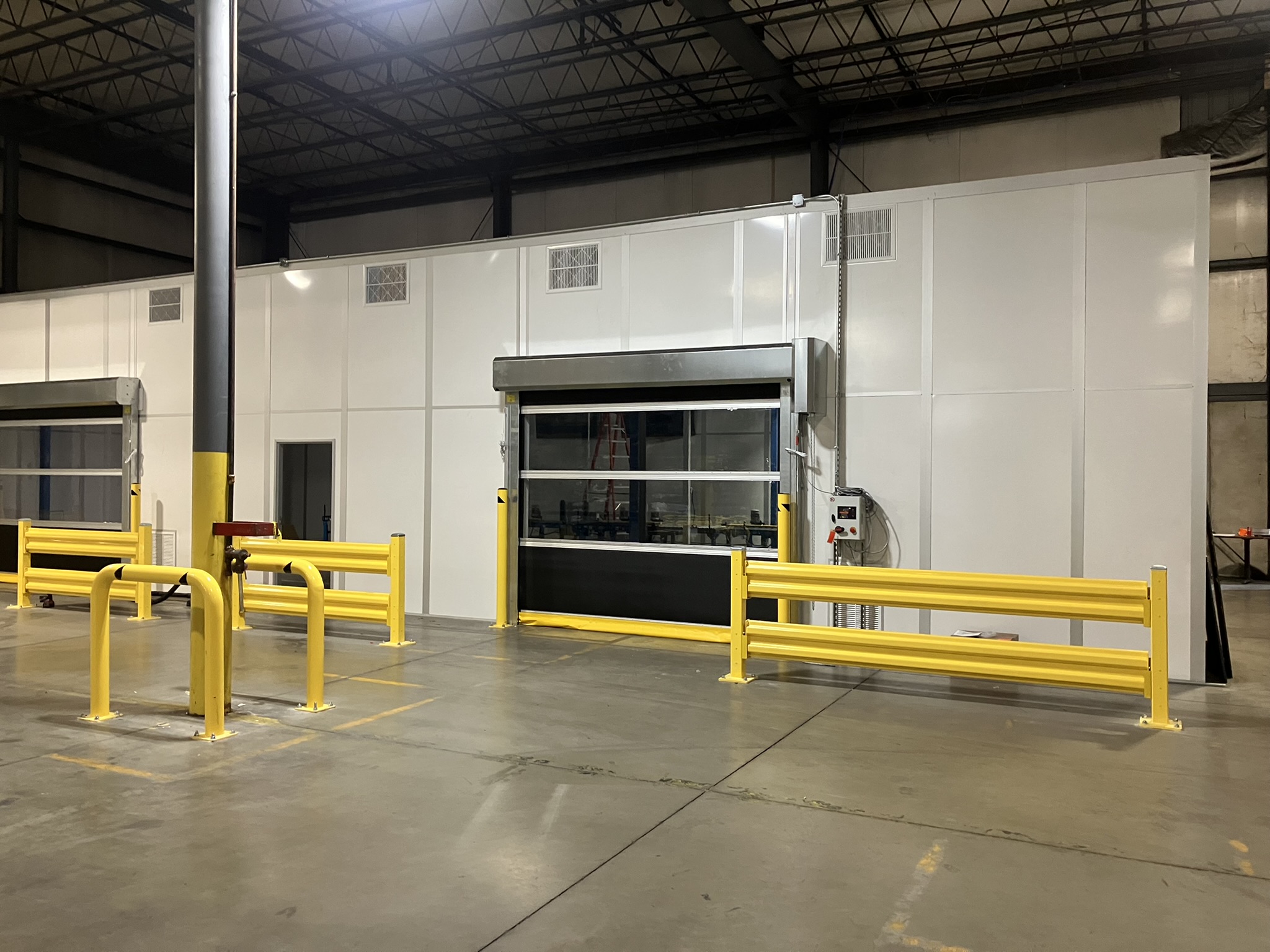
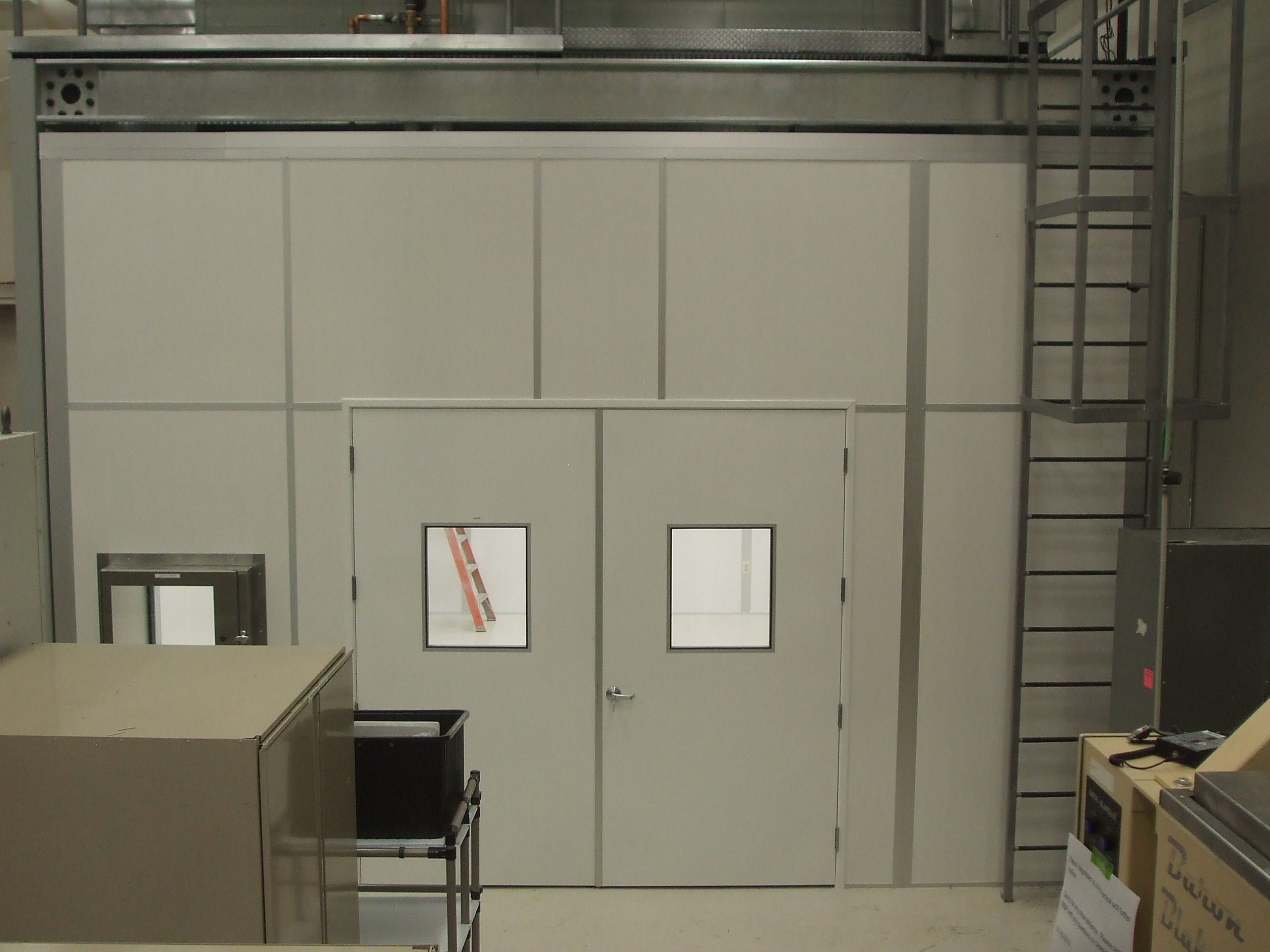
Depending on the machine, all this might mean access doors, roll-up doors, removable panels, hinged wall sections, or some combination of them. In the case of larger equipment, you might need a roll-up door wide enough for a cart or forklift.
Ventilation is another potential consideration. When you put walls and a ceiling around a machine that generates heat, the heat often has nowhere to go.
CNC machines, lasers, and similar equipment can put out a lot of thermal energy, needless to say. If that’s not accounted for in the design, you may end up solving one problem while simultaneously creating another.
Exhaust fans, filtered air intake, or a standalone HVAC system may be needed depending on the application.
Why Modular Works Best
As you might expect, stick-built construction around a running machine is likely going to be as bad as it sounds. It’s hard to do good work when there’s a crew on your floor for weeks, generating all kinds of dust and debris next to the equipment you’re trying to protect. And, if you need to change something later, you’ll have to demolish it, most likely.
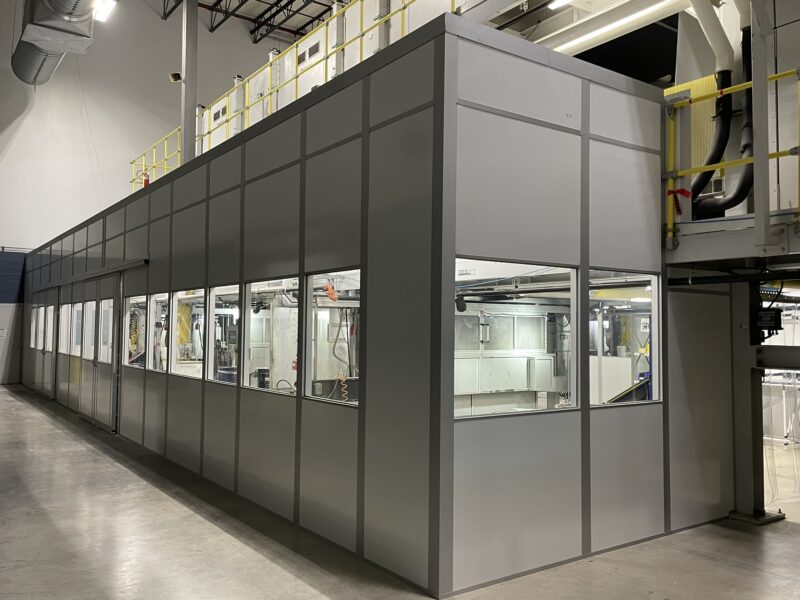
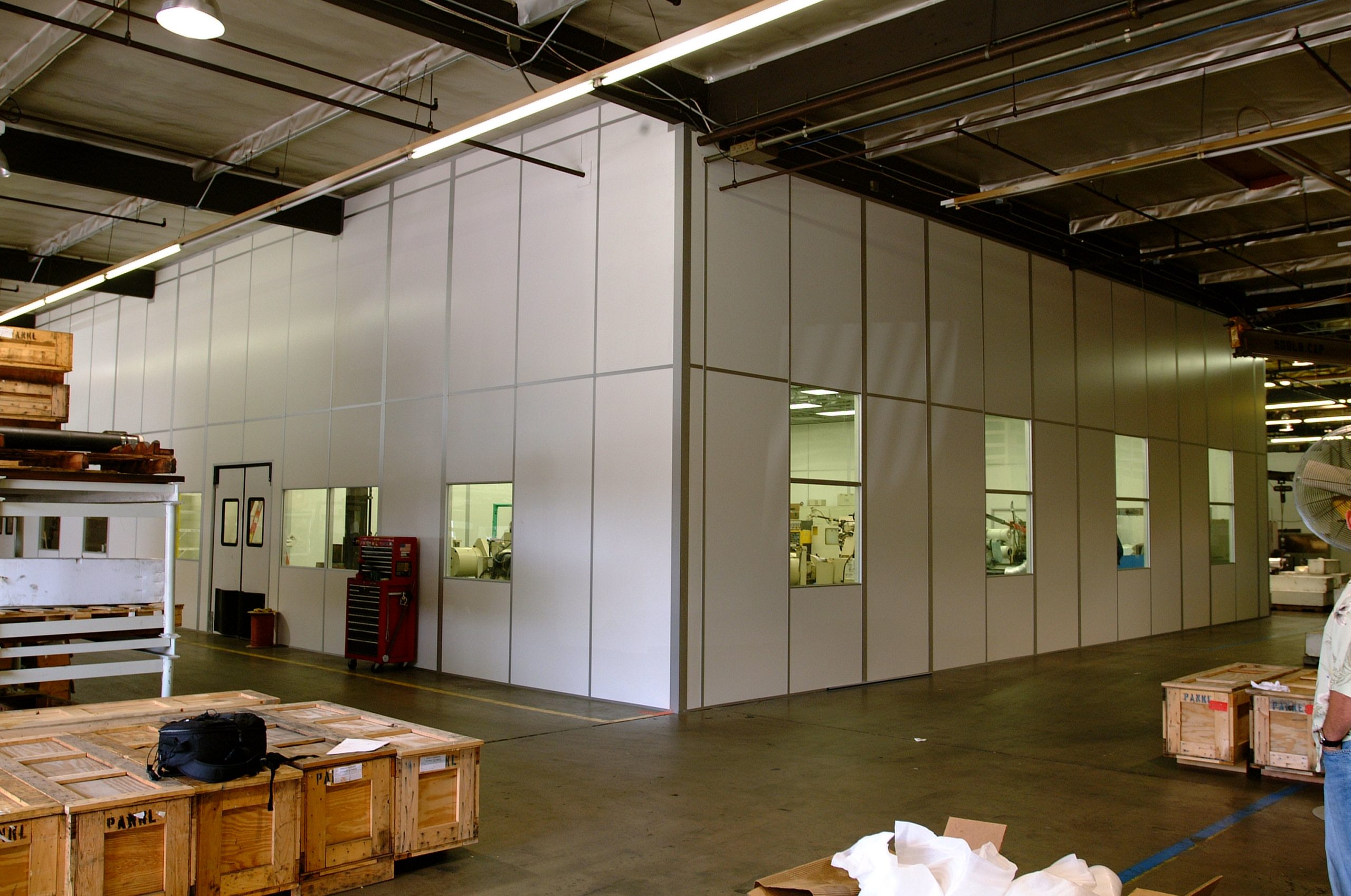
Modular enclosures are much different. The panels, doors, windows, and structural pieces are all built offsite in a factory, then shipped to you ready to assemble. On-site installation typically takes days rather than weeks.
Our team can usually have a standard enclosure assembled and operational within one to five days, depending on size and complexity.
For most jobs, the machine can keep running right up until the final connections are made.
At the end of the day, retrofitting an enclosure around existing equipment is something we do all the time. If you’ve got a machine on the floor that needs to be enclosed, reach out to us at MachineEnclosure.com and we’ll help you figure out what makes sense.