
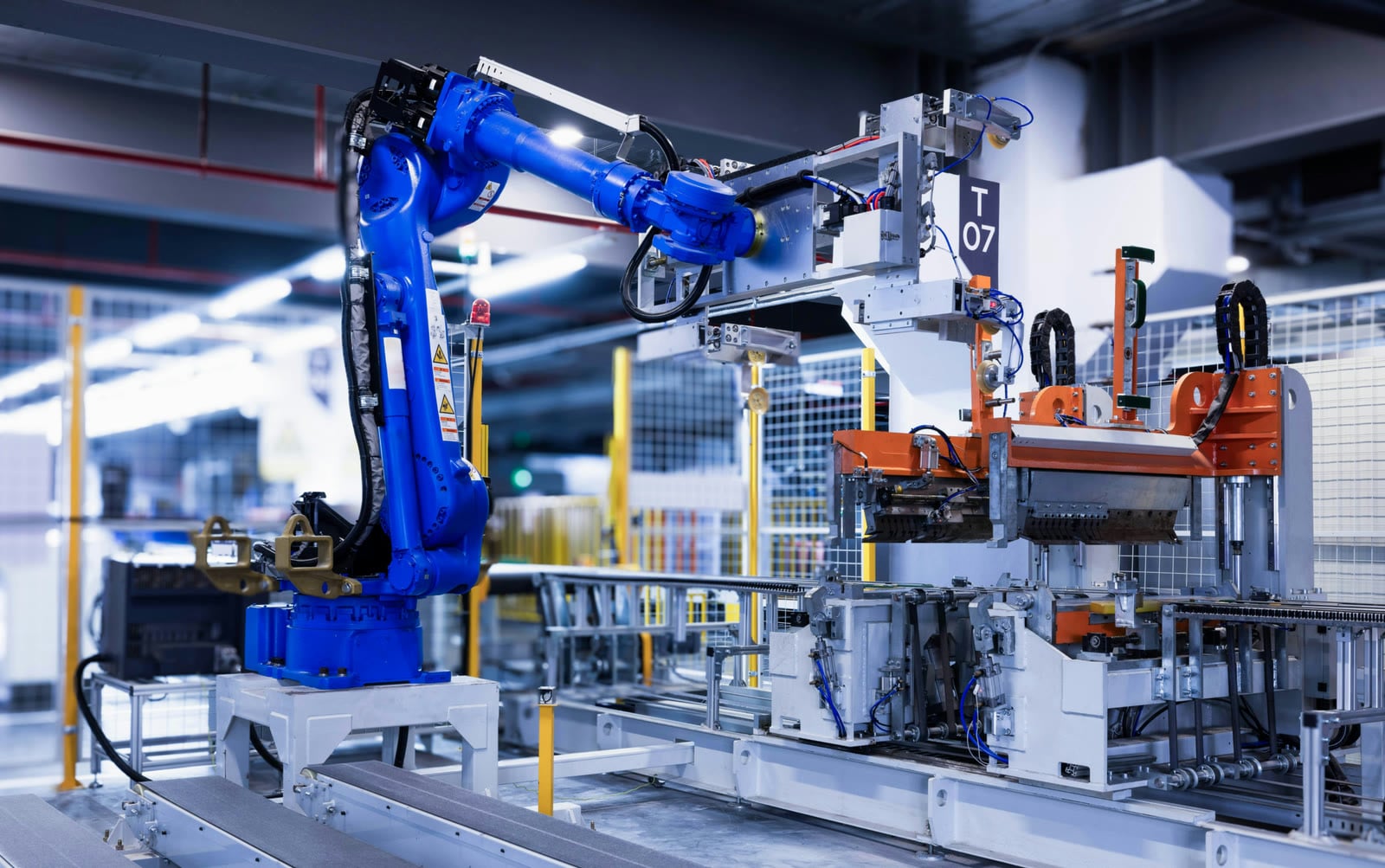
Automated Machinery Enclosures
As more and more plants and manufacturing facilities begin using robotics and automated systems, keeping workers safe has become an ever bigger priority.
It should go without saying that robotic arms and conveyors are both fast and powerful, and no one should be close enough for an accident to happen. With the right barriers in place, however, you can protect your employees from danger.
Automated machinery enclosures create a physical wall between people and the machines. They also help you section off your operations and reach compliance with certain standards, like OSHA and ANSI.
At MachineEnclosure.com, we design and build modular automation enclosures for a wide range of automated equipment and industrial applications. Each one is engineered around your specific machines and layout.
What an Automated Machinery Enclosure Does for You

OSHA and ANSI Compliance
OSHA 1910.212 covers general machine guarding requirements, while ANSI/RIA R15.06 goes further, with specific requirements for robotic systems including interlocked doors, minimum barrier heights, and risk assessment. Enclosures with interlocked doors and proper barrier heights are a way to meet these standards.

Protects Equipment
It’s not only just about people though. Enclosures can also help protect the machinery itself, especially from things like accidental contact, forklifts, or dropped materials.

Organizes the Production Floor
Automated equipment scattered across an open floor may also create confusion regarding where people can and can’t walk safely. Enclosures help you clearly define boundaries, which also makes the facility feel more organized and easier to manage.

Reduces Noise
These systems can create loud sounds, especially while running continuously. Enclosures with sound-dampening panels can help bring noise levels down and make surrounding work areas more comfortable.

Keeps Workers Safe
An enclosure puts a physical barrier between employees and machinery that could be dangerous, keeping people out of the work zone while equipment is running. This is especially important for robotic arms and automated systems that can move unpredictably during certain cycles.
BUILT FOR OSHA & ANSI/RIA R15.06 COMPLIANT SAFETY GUARDING
Types of Automated Equipment We Build Enclosures For
We build enclosures for a wide range of automated equipment, including:
- Robotic arms and robotic cells
- Conveyor systems
- Automated assembly lines
- Palletizing and packaging systems
- CNC machine cells
- Automated welding stations

Safety interlocked doors

Polycarbonate viewing panels

Barrier heights to meet ANSI/RIA R15.06 requirements

Roll-up or sliding doors
Sound-dampening wall panels

Integration with light curtains and safety sensors

LED lighting

Custom colors, finishes, and branding
Why Modular is Best for Automated Machinery Enclosures
In any production line, the floor plans need to change eventually. With permanent construction, it’s nearly impossible to adapt to such circumstances.
This is why we believe that modular enclosures are the better choice for most automated machinery:
Fast Installation
Modular panels are prefabricated and then assembled on site. Most enclosures go up in a few days, without you having to shut down your operations.
Custom Fit
Each manufacturing facility is different, so each enclosure should be designed accordingly. Each buildout can match your specific equipment, your industry, relevant regulations, and layout.
Flexible
If business circumstances change, your enclosure can be taken apart and reassembled elsewhere, whether that’s somewhere else in the same facility or another location altogether. There’s no need for demolition or rebuilding.
Lower costs
Upfront costs are typically less than traditional construction, and because the panels can be reused and reconfigured, you get a much better overall ROI.
Why Work With Us
We’ve been building enclosures for manufacturers for over 35 years. We’re not a general contractor who happens to build enclosures; this is what we do.
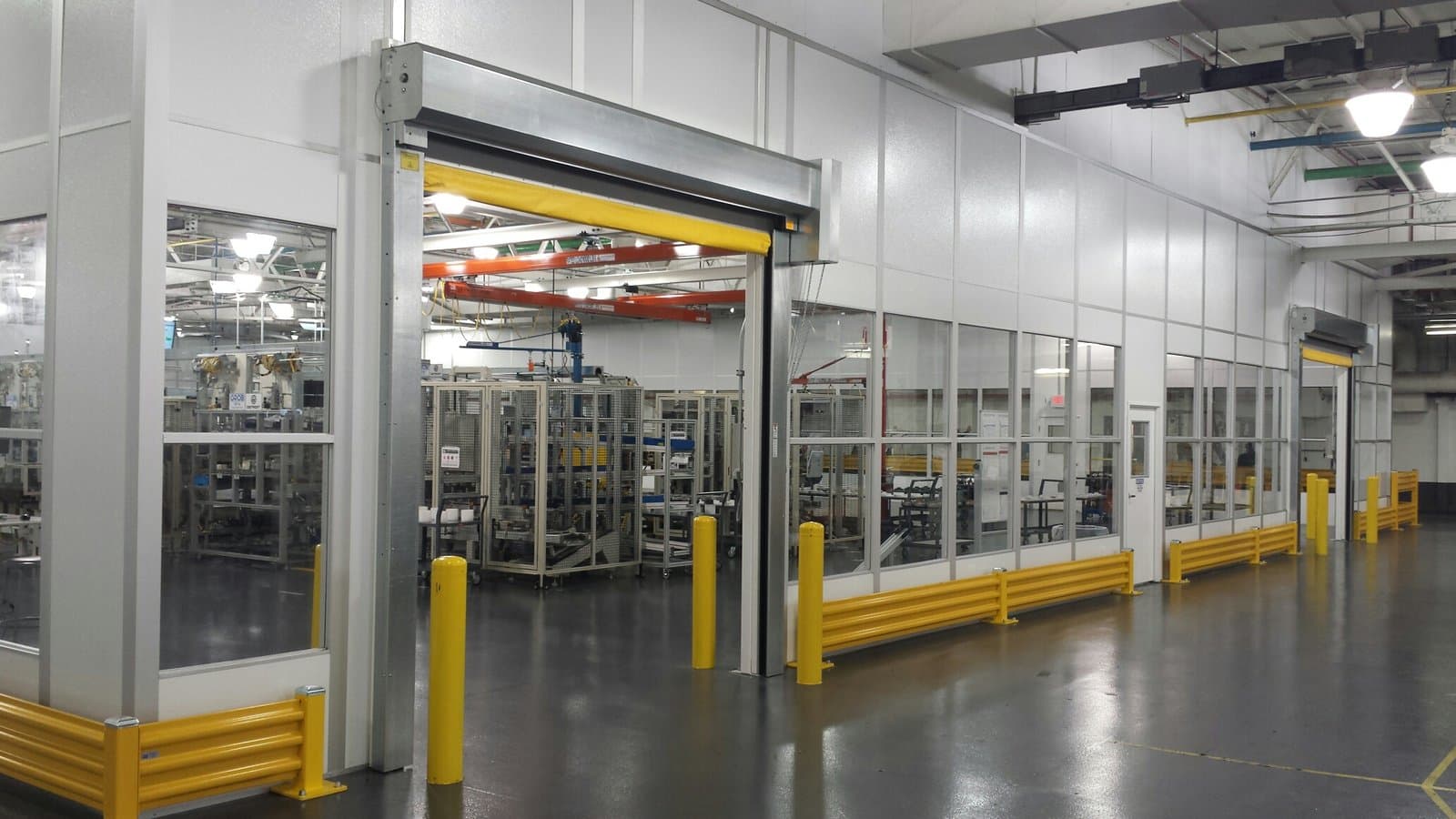
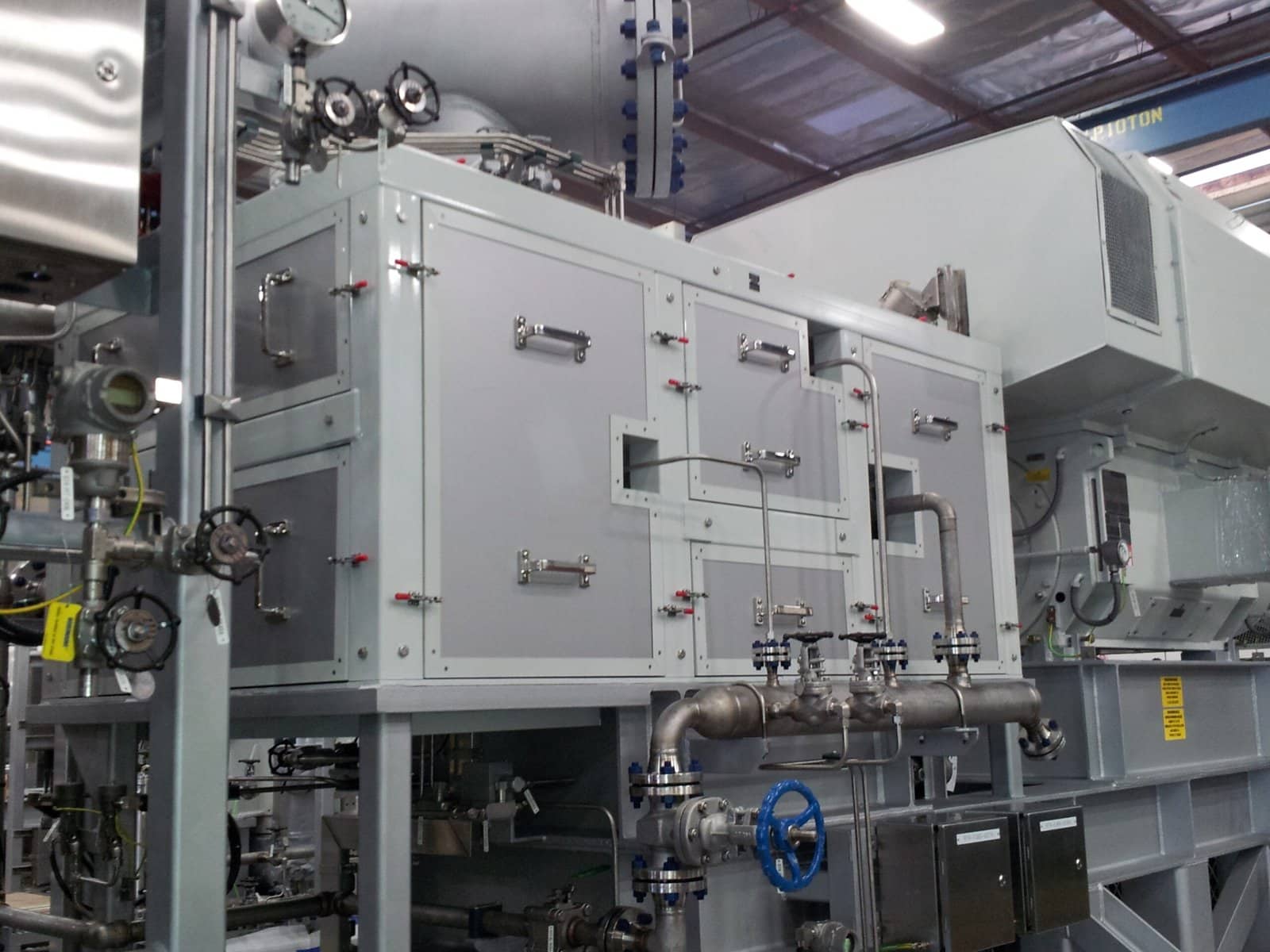
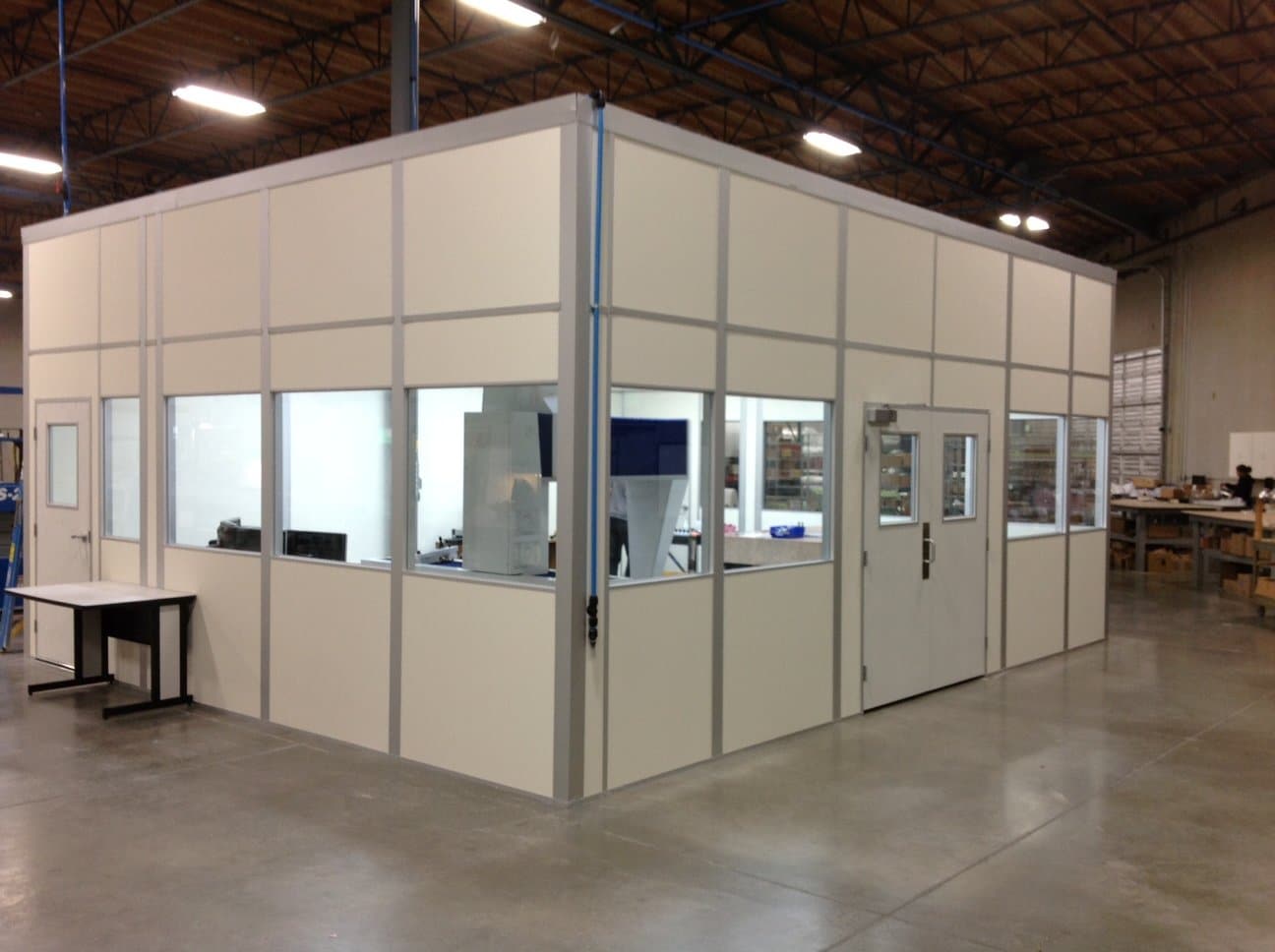
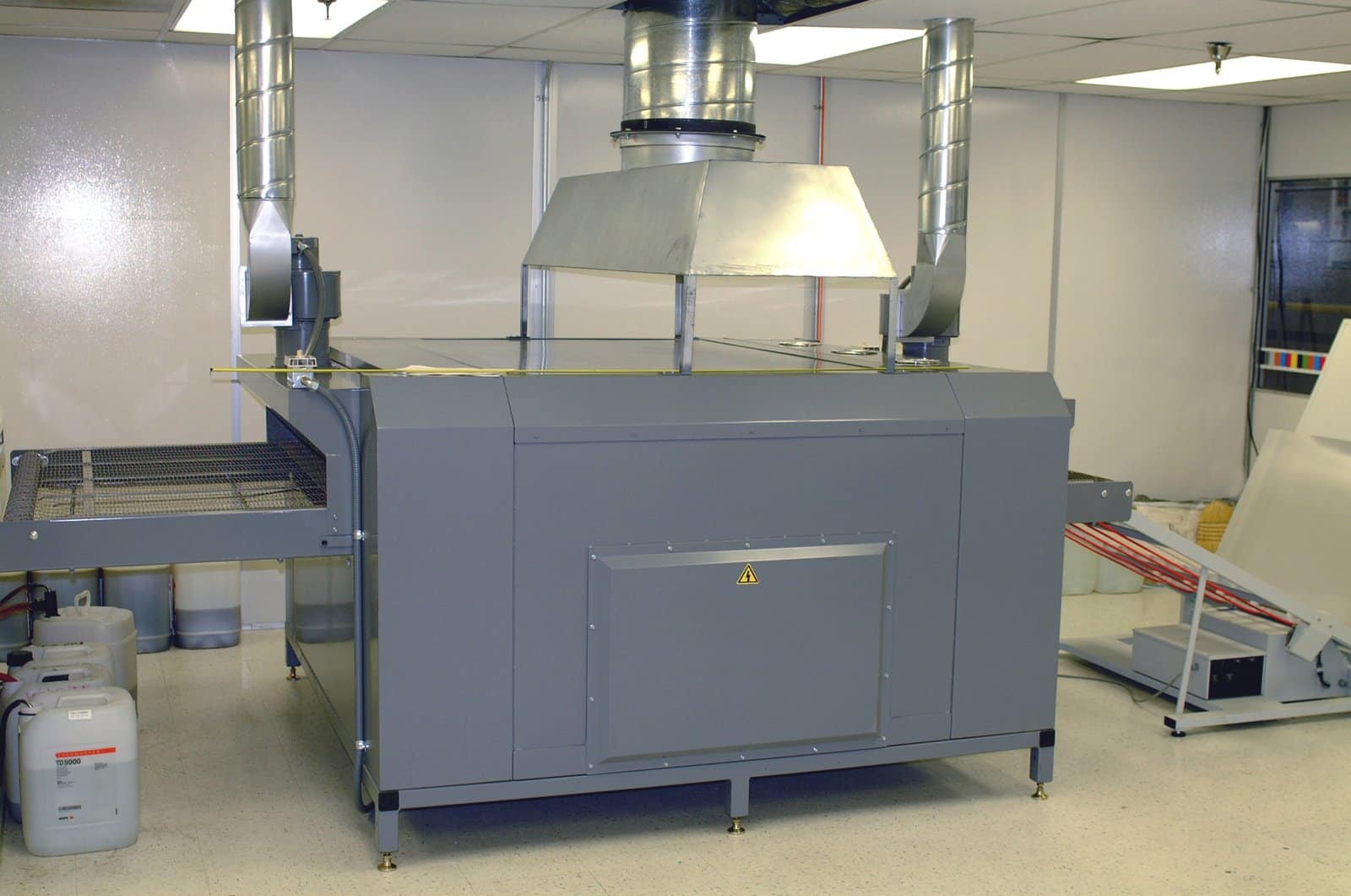
One specialty, and every photo here proves it:
Get a Quote
Every project begins with a conversation. Tell us what automated equipment you're running, what regulations you need to meet, and what your facility looks like. We'll design an enclosure that fits your needs.
Download brochureFAQs About Automated Machinery Enclosures
What safety standards apply to automated machinery enclosures?
The main ones are OSHA 1910.212 for general machine guarding, and ANSI/RIA R15.06 for robotic systems specifically. R15.06 covers requirements like interlocked access points, minimum barrier heights, and risk assessment. Depending on your industry, additional standards like ISO 10218 or ISO 13849 may also apply.
Can enclosures be integrated with existing safety systems?
Yes, absolutely. Modular enclosures can be designed to work with safety PLCs, light curtains, area scanners, and interlocked gates that are already part of your automation setup.
What's the minimum height for a robotic cell enclosure?
Under ANSI/RIA R15.06, fixed guarding for robotic cells typically needs to be at least 60 inches high, with limited clearance at the floor. The specific requirements depend on the risk assessment for your application.