
Temperature-Controlled Enclosures: A Simple Guide
When people think of temperature control in a building, they usually think of comfort.
In manufacturing, it’s about something else entirely: consistency.
In this article, we’ll go over why managing temperature is important in manufacturing, which applications benefit from it most, and how temperature-controlled enclosures actually work.
Why Is Managing Temperature Important in Manufacturing?
In manufacturing, temperature affects more than most people realize.
Basic physics tells us that metals expand when they heat up, yet contract when they cool down.
Nobody will notice these changes in their day to day life, and in most situations, it isn’t a big deal.
But if you’re working with tight tolerances, only a few degrees of change over the course of a day can push parts out of spec.
What’s more, in some cases, the materials you’re working with (adhesives, coatings, inks, etc.) may behave differently at different temperatures. What works well at 68°F might not work the same way at 80°F.
The bottom line is that if your manufacturing operation depends on consistency, temperature is one of the biggest variables you need to control.
Which Applications Benefit From Temperature Control?
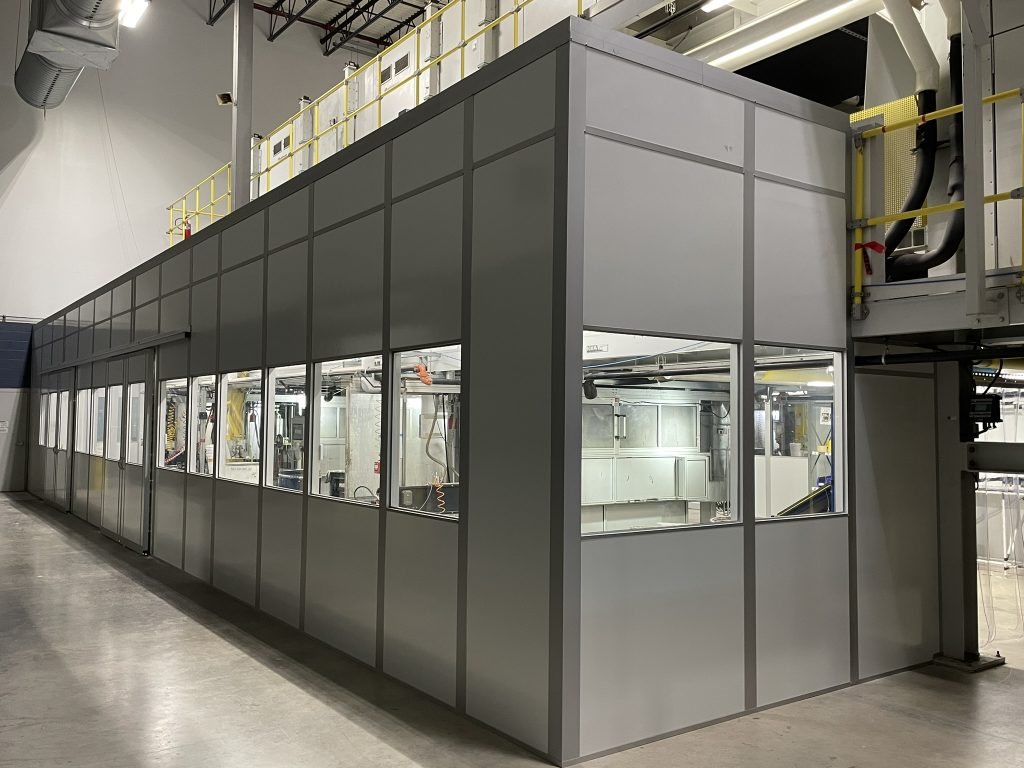
Of course, not every piece of machinery will benefit from managing temperature, but for certain applications, it can make a significant difference.
- CNC Machines. For normal CNC work, temperature may not be such a big concern. But for tight tolerance jobs, temperature and humidity swings can cause enough material movement to push parts way out of spec. Some manufacturers even store raw materials inside the enclosure so that everything acclimates to the same temperature.
- CMMs (Coordinate Measuring Machines). CMMs, on the other hand, are probably the most temperature-sensitive machines of them all. The international standard for dimensional measurement (ISO 10360) requires calibration at 20°C (68°F), with allowable fluctuation of only ±1°C. If the environment isn’t held within that range, your measurements could end up unreliable.
- EDMs (Electrical Discharge Machines). EDMs are also sensitive to temperature changes. If the parts being cut expand or contract during the process, it can lead to errors. A stable environment helps keep results consistent and reduces failure rates.
- Printers. Industrial printers also need consistent temperature and humidity to produce reliable output. Temperature swings can affect things like ink behavior and print quality.
- Pump Enclosures. Finally, there are pump enclosures, which may have digital monitoring equipment that is sensitive to temperature changes or extremes. Housing them in a temperature controlled enclosure can help keep those systems running properly.
How Do Temperature-Controlled Enclosures Work?
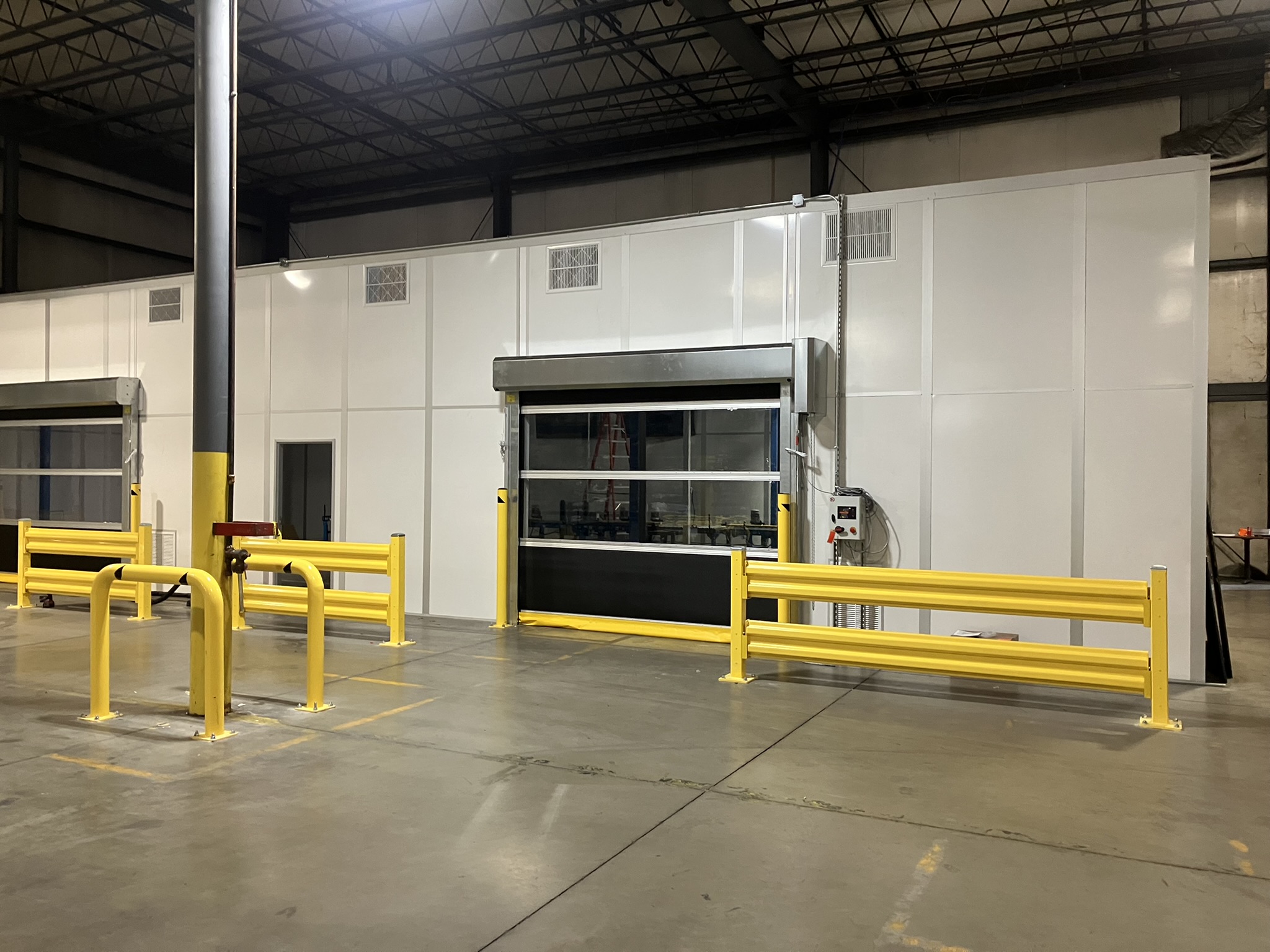
So what actually goes into controlling the temperature inside an enclosure? It comes down to a few important parts working together.
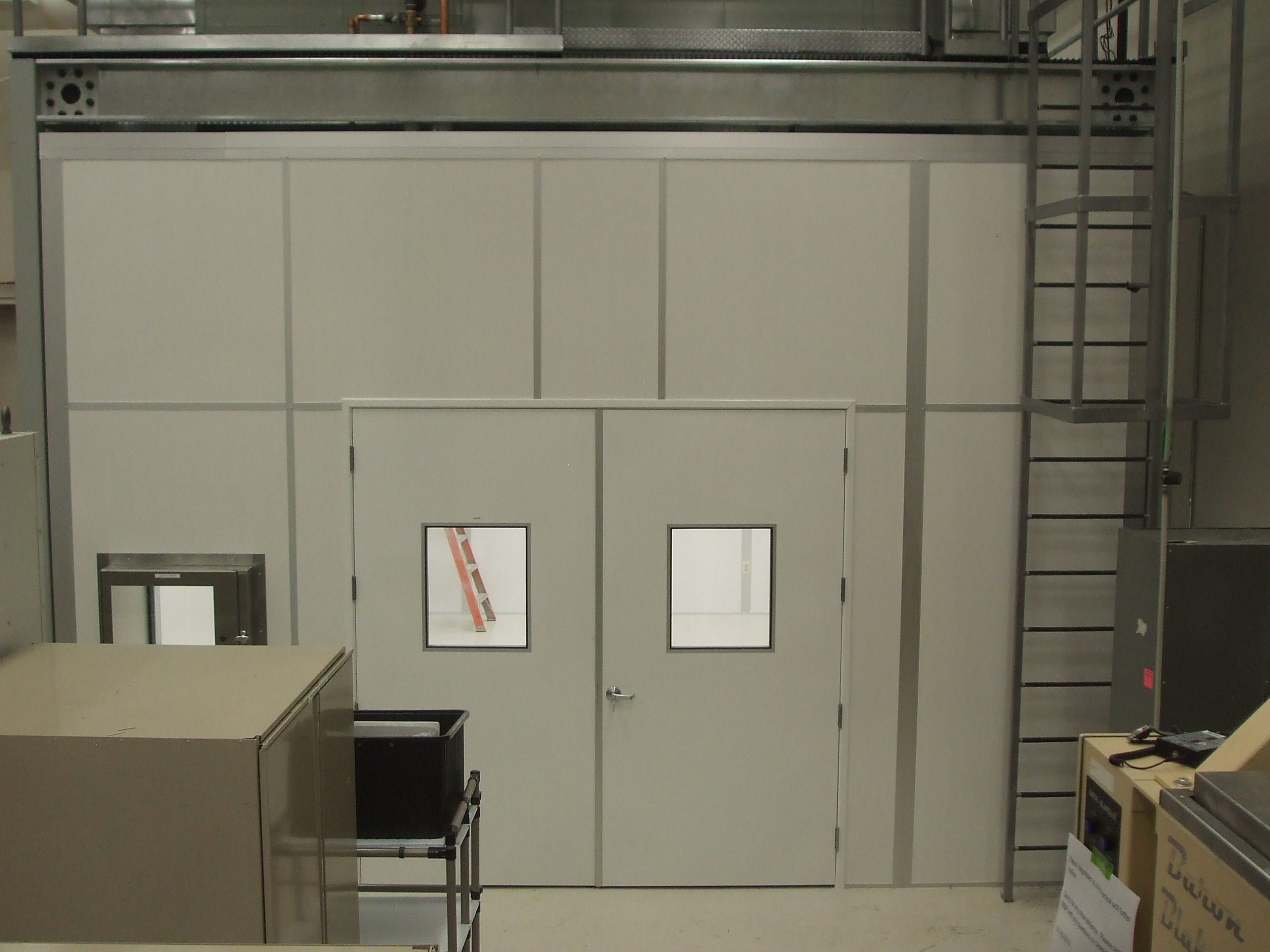
- Insulated panels. This is the foundation. Insulated wall and ceiling panels reduce how much heat transfers in or out of the enclosure. Without good insulation, your HVAC system has to work much harder to keep the set temperature, which drives up energy costs and makes it harder to hold tight tolerances.
- HVAC systems. This is what actively controls the temperature inside the enclosure. Depending on the application, this could be as simple as a basic air conditioning unit or as precise as a system that holds temperature within a degree or two. Some systems also include heating for environments where cold is a concern.
- Sealed construction. Gaps, cracks, and poorly sealed joints let outside air in, which introduces temperature variation. The enclosure is sealed tightly so that the HVAC system is controlling the air inside rather than fighting a constant flow of outside air.
- Humidity control. Temperature and humidity typically go hand in hand. When you control one, you usually need to control the other. Many temperature controlled enclosures include dehumidifiers as part of the HVAC system.
- Monitoring systems. Finally, some enclosures include sensors and alarms that track temperature and humidity in real time. If conditions drift outside the acceptable range, you know about it before it affects your work.
The Bottom Line
If your process depends on precision, consistency, or particularly sensitive machinery, temperature is a variable you should pay attention to. By adding a temperature-controlled enclosure, you create a stable environment where your equipment can do its best work.
At MachineEnclosure.com, we design and build temperature controlled enclosures for a wide range of manufacturing applications. Whether you need to hold conditions within a degree or just keep things stable throughout the day, we can help you figure out what makes sense for your space.
Reach out to us today to get a quote.