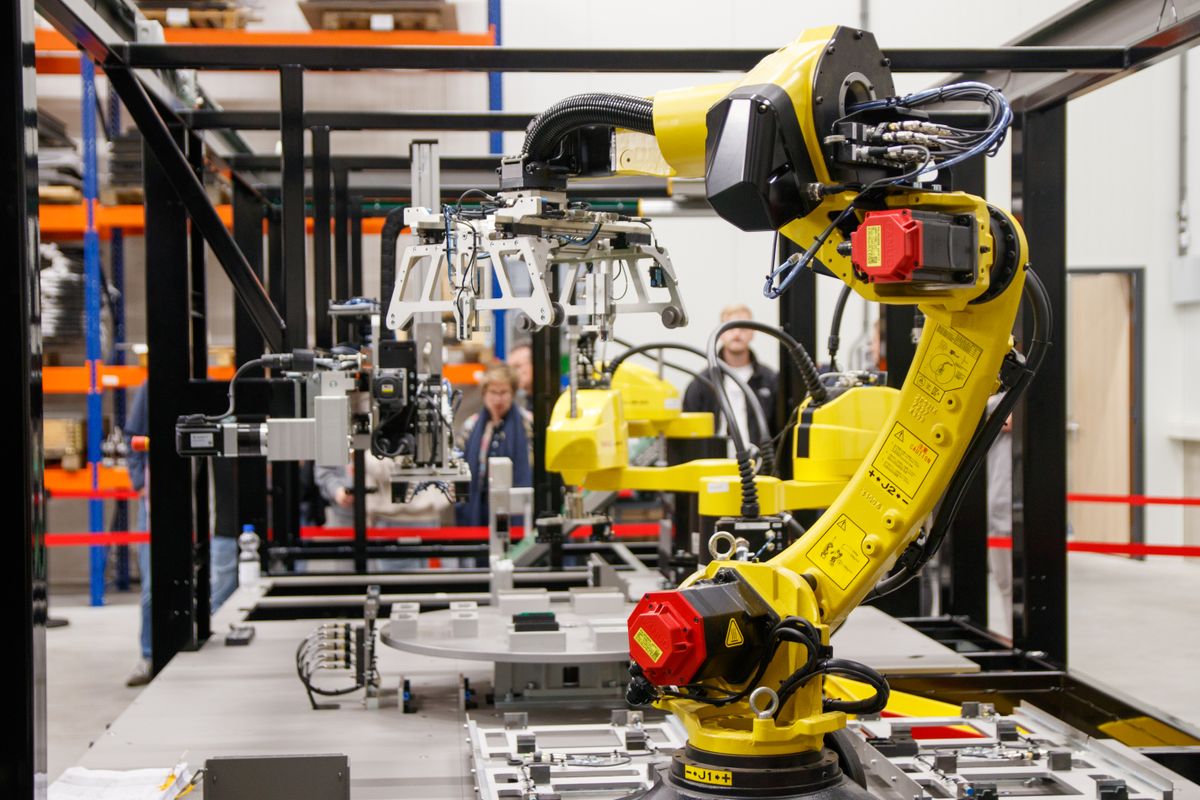
Robot Safety Enclosures: What You Need to Know
These days, robots in manufacturing are becoming more and more common. However, with every new installation, there comes an obvious safety question:
How do you adequately protect the people working around them?
In this article, we’ll go over why robots need enclosures, what OSHA and industry standards expect, and what to look for when choosing one.
Why Do Robots Need Enclosures?
It goes without saying that industrial robots nowadays are incredibly fast and powerful. Unfortunately, they are also completely unaware of their surroundings.
When a robotic arm welds, cuts, or does some other operation, it follows its programmed path no matter what, taking no note if someone has come nearby.
It’s fairly obvious what kind of problems this can create.
However, if you add a protective barrier (an enclosure) around the robotic cell, it keeps people out of dangerous areas.
What OSHA and Industry Standards Expect
Though OSHA doesn’t have a regulation specifically for robots, that doesn’t mean they’re entirely unregulated.
Industrial robots fall under the same general machine guarding standard (1910.212) that applies to all machinery, as well as OSHA’s General Duty Clause, which requires employers to create a workplace free from recognized hazards.
For more specific guidance, OSHA refers to the ANSI/RIA R15.06 standard, which is the main industry standard for robot safety, and covers everything from risk assessments to safeguarding methods to maintenance procedures.
One of the safeguarding methods specifically mentioned in the standard is interlocking doors around the workcell. If the door is open, the robot stops. It’s the same concept used in CNC enclosures and other machine guarding solutions.
Employers are also expected to conduct risk assessments for every robotic system, keep records of testing, and make sure anyone working near the robot is properly trained.
Why Use an Enclosure Instead of Fencing
If you’ve seen robotic workcells before, you’ve probably seen them surrounded by metal fencing or wire mesh. That’s the traditional approach, and it does the job of keeping people out.
But that’s about all it does.
Fencing won’t contain noise, nor will it stop debris or particles from escaping.
If your robot is running a process that generates sparks, dust, fumes, or noise, fencing keeps people away from the hazard but lets everything else spread across the floor.
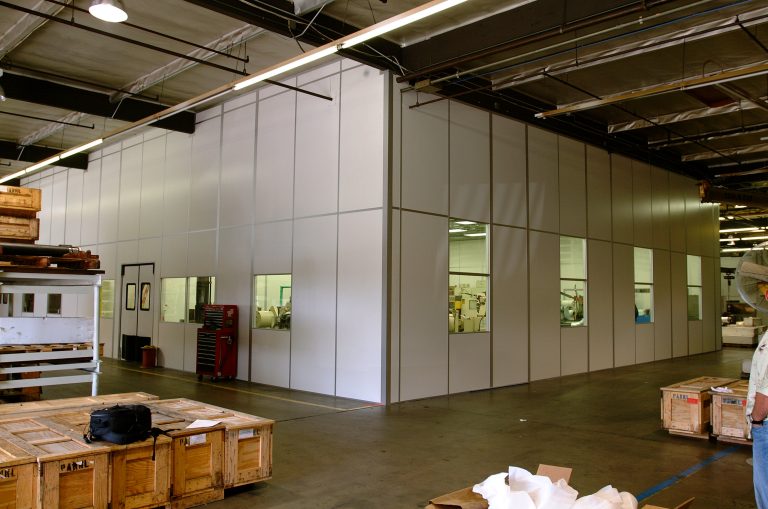
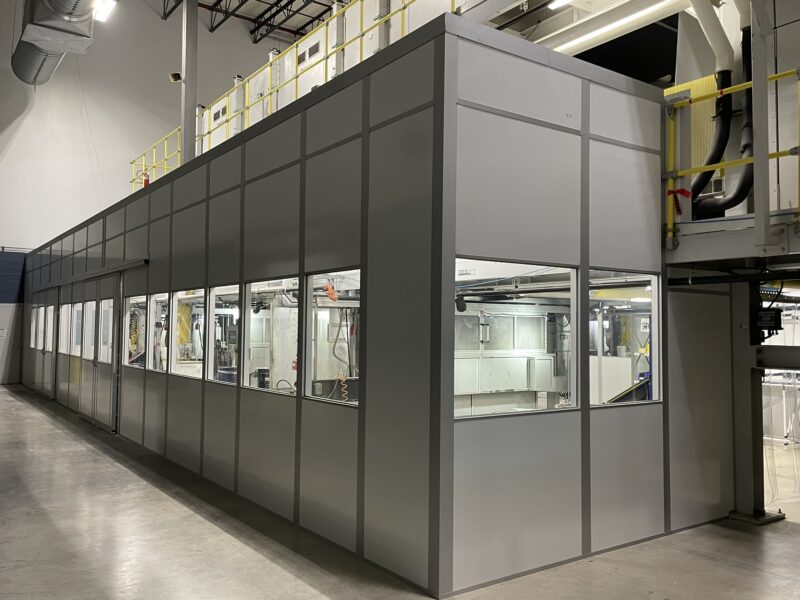
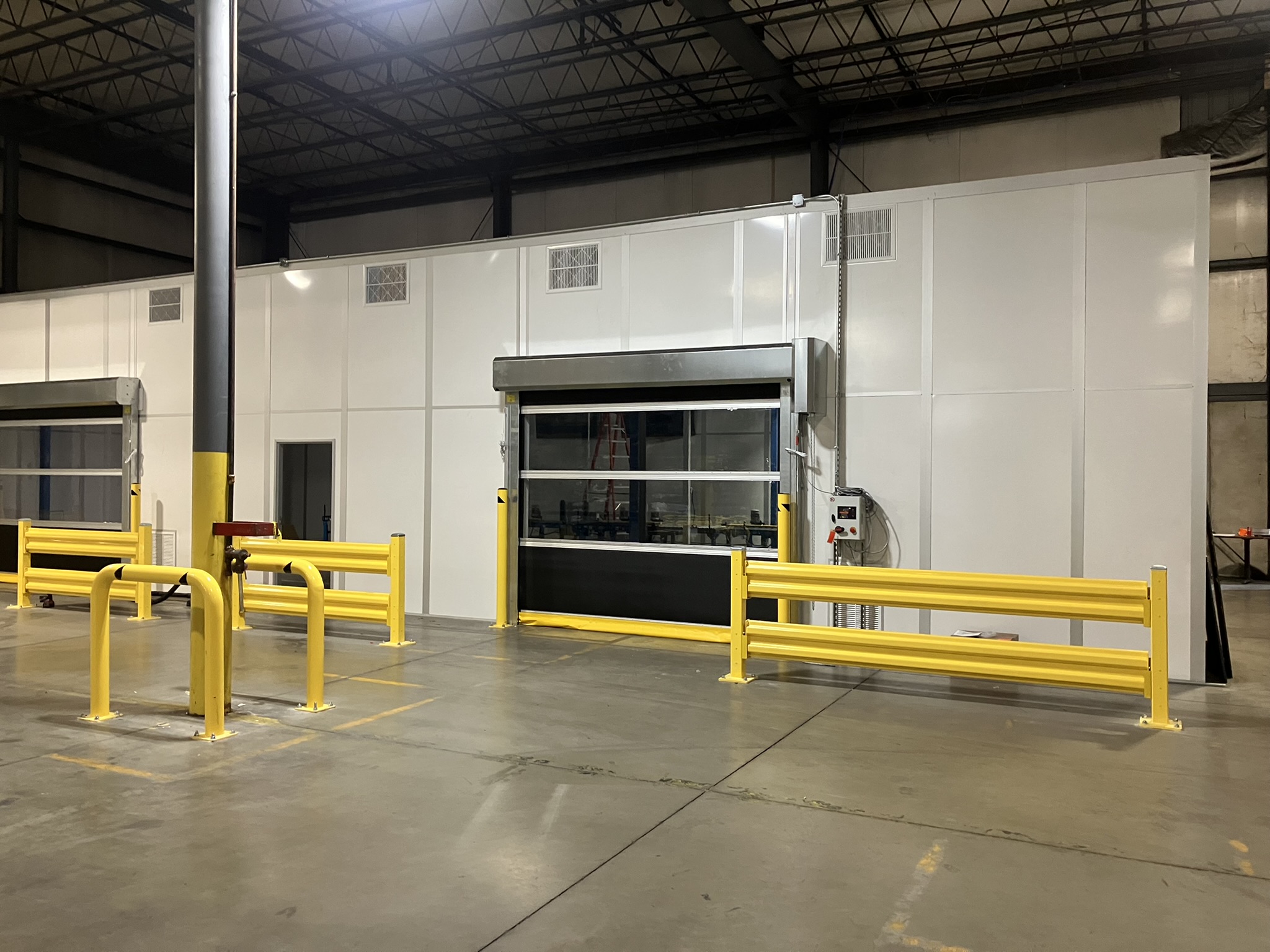
However, modular enclosures can help you take care of both. They keep people out and keep everything else in. Depending on how it’s built, it can also reduce noise levels, contain airborne contaminants, and even control temperature and humidity if the process calls for it.
Of course, not every application needs a full enclosure. If your robot is doing basic pick and place work with no debris, noise, or environmental concerns, fencing might be all you need.
It really depends on what the robot is doing and what hazards the process creates.
What to Look for in a Robot Safety Enclosure
If a full enclosure makes sense for your application, here are some features to keep in mind:
- Interlocked doors that stop the robot when opened.
- Enough space for the robot’s full range of motion.
- Viewing panels so operators can see what’s happening inside.
- Strong materials/structure to handle a dropped part, ejected material, etc.
- Ventilation or extraction (if your process creates a lot of fumes, dust, or particles).
- Sound absorbing materials if noise is a concern.
- Special access points for maintenance.
The Bottom Line
As robots become more common on manufacturing floors, creating the right safety barriers is only going to become more important.
A robot safety enclosure is one of the most complete ways to protect your workers and contain the hazards that come with automated processes.
At MachineEnclosure.com, we build custom enclosures for robotic workcells and automated equipment. Reach out today to get a quote and talk about what makes sense for your space.