Machine Enclosures and Quality Control: A Simple Guide
If you’re doing precision work and getting inconsistent results, the problem might not be your equipment, but rather the environment around it.
Things like temperature, humidity, vibration, and even dust can affect the quality of your output, and most of the time, people don’t think to look there.
In this article, we’ll cover why controlled environments are important for precision work, what kind of machines benefit from them, and some of the conditions that they manage.
Why Environment Is Important for Precision Work
If you’re doing any kind of tight-tolerance manufacturing, the environment around your machine matters a lot more than you might initially think.
Temperature is probably the most important environmental variable to control in this regard, as metals expand and contract even with small fluctuations. A few degrees of incremental change over the course of a day can be enough to push parts out of spec, especially when you’re working in microns or thousandths of an inch.
As you might have guessed, humidity is just as important. With enough moisture in the air, both materials and electronics in your equipment can be affected as well.
Vibration is an overlooked problem too. If your machinery is sitting on the same floor as a stamping press or even a forklift route, there’s a chance those vibrations can transfer and throw off your results. It might not be obvious at first, either.
And last but not least, there are fine particles to consider. Things like dust, metal shavings, and coolant mist can all get into your working area and contaminate surfaces or interfere with measurements.
The main point is that if you’re not controlling these variables, your machine can only be so accurate, even if it’s of high quality.
Where Controlled Environments Matter Most
While it’s true that not every machine needs a controlled environment, for certain applications, it can make a world of difference, as in the following:
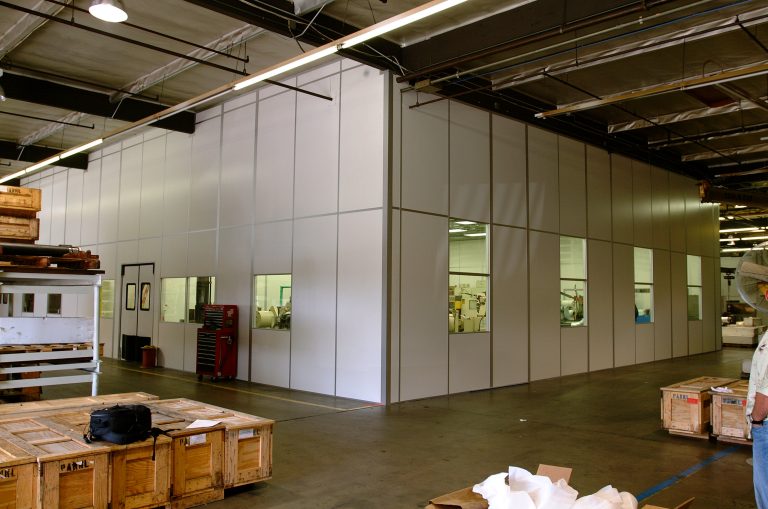
- CNC Machines: For standard CNC work, environmental control isn’t always important. However, the exception is for tight-tolerance jobs, where temperature and humidity swings can cause enough material movement to push parts out of spec. An enclosure that stabilizes conditions around the machine can reduce rejection rates and improve consistency. Some manufacturers also store raw materials inside the same enclosure so everything acclimates to the same temperature before machining begins.
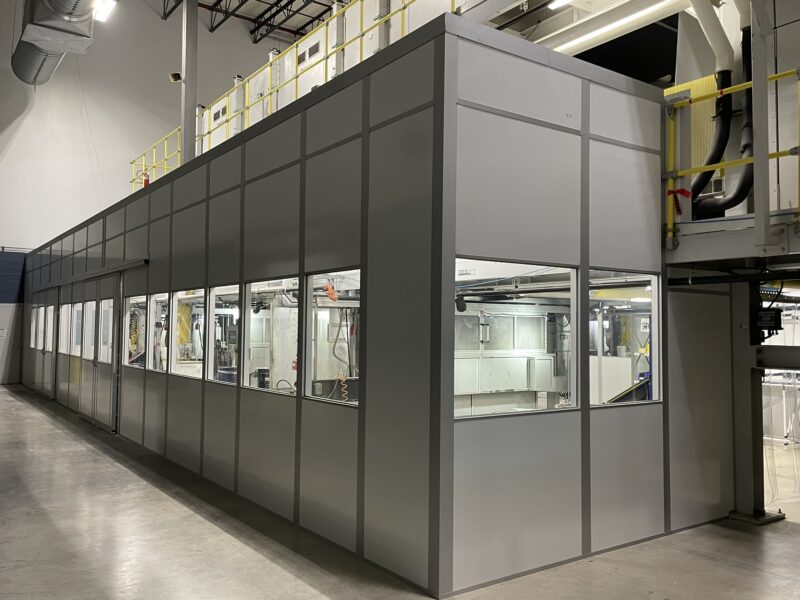
- CMMs (Coordinate Measuring Machines): These are the machines that verify whether your parts actually meet spec. The problem is, CMMs are very sensitive to their environment, and temperature changes can cause both the machine and the parts being measured to expand or contract, and therefore your readings might not be accurate. Most CMM manufacturers recommend operating in a temperature-regulated space, typically around 20°C (68°F), and adding an enclosure around your machine is one of the simplest ways to achieve that.
- EDMs (Electrical Discharge Machines): EDMs cut by using electrical discharges, and the process is sensitive to temperature. If the environment isn’t stable, the parts being cut can expand or contract during the process, leading to inaccuracies. An enclosure helps keep conditions consistent and reduces failure rates.
- Printers: This one might seem odd in a manufacturing context, but industrial printers also need consistent humidity, temperature, and cleanliness for reliable results. Too much humidity and you get jams and smearing, while with too little you get static and feed issues.
What Conditions Does a Controlled Environment Manage?
So what does it take to control these variables? It depends on the application, but there are a few common features that most quality-focused enclosures share.
Temperature Control
This is usually the most important. Enclosures can have relatively basic HVAC systems or very precise ones that hold temperature within a degree or two. For CMM work, that precision really matters. For CNC machines, it may just mean keeping conditions stable enough to prevent major swings throughout the day.
Humidity Control
This, of course, goes hand in hand with temperature. Some applications need specific humidity ranges, while others just need it to stay consistent. Either way, the enclosure needs to manage it.
Air Filtration
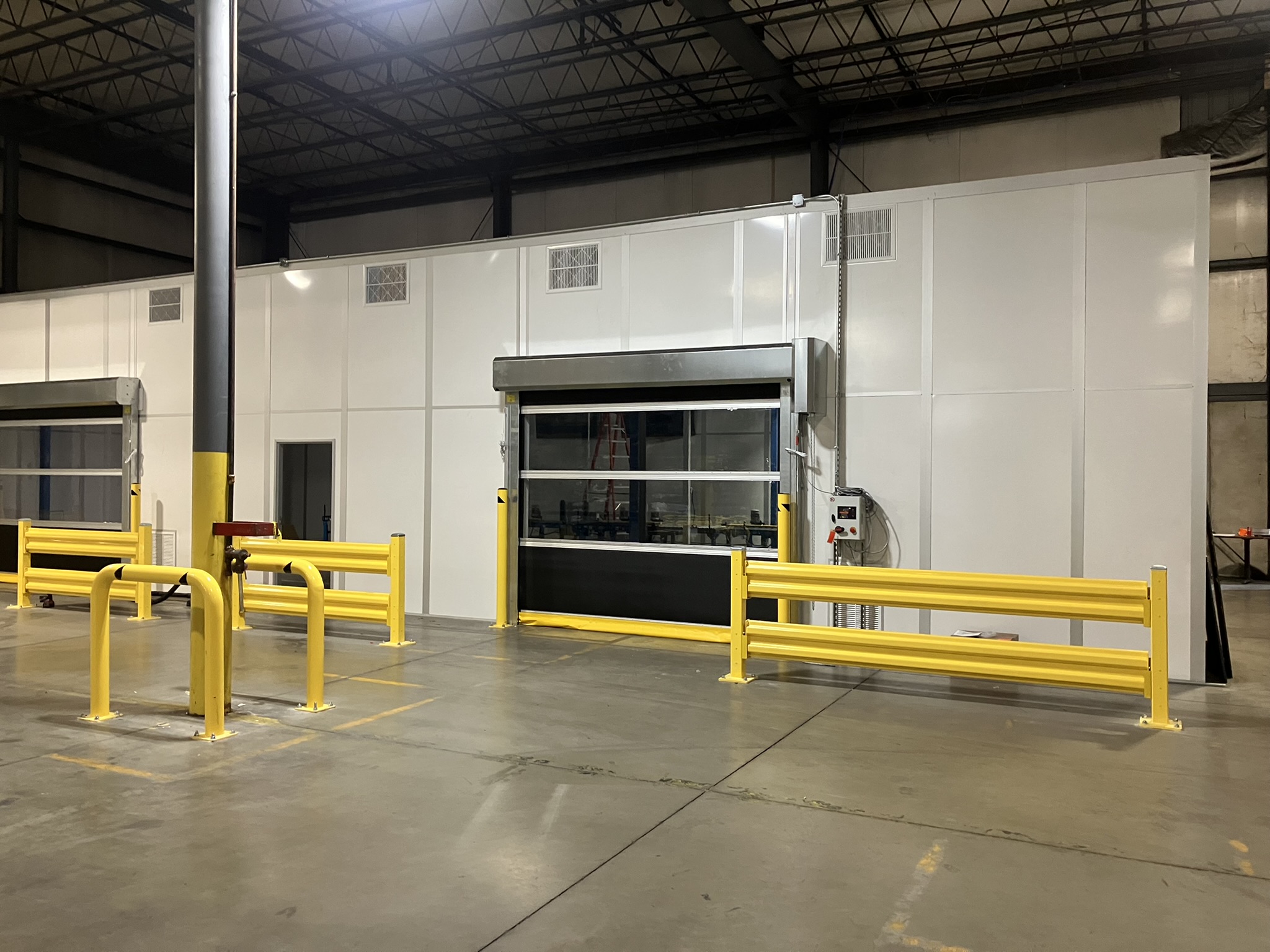
Air filtration systems keep dust and other fine particles out of the working area. Depending on the application, this could include sealed panels, positive air pressure, or even HEPA/ULPA air filters.
Vibration Isolation
This is more about placement and construction than any specific feature per se, but it is still important. An enclosure built away from busy, loud, or chaotic areas can reduce the transfer of vibration from equipment and other activities.
The Bottom Line
If you’re seeing inconsistent results and you’ve already ruled out the equipment, it might be time to look at the environment.
At MachineEnclosure.com, we build controlled environments for precision manufacturing. Whether it’s a CNC, CMM, EDM, or something else entirely, we can help you figure out how to improve your setup. Reach out today to talk with an expert and get a quote on new buildouts.