Most people don’t start looking into machine enclosures until they have a specific problem. Whether it’s from noise, air quality, OSHA issues, or something else.
But by the time they do, they’ve usually already got a few assumptions about how it works that aren’t quite right.
In this article, we’ll go through a few of the most common ones.
1. “We’d Have to Shut Down Production”
This is probably the biggest reason enclosure projects are delayed (often, indefinitely).
When anyone hears the word “construction,” especially when it’s not immediately necessary, what comes to mind isn’t pretty. Crews moving in and out of the floor for weeks, machines powered down, and production schedules thrown off. But if you’re talking about stick-built construction, that’s usually a reasonable concern.
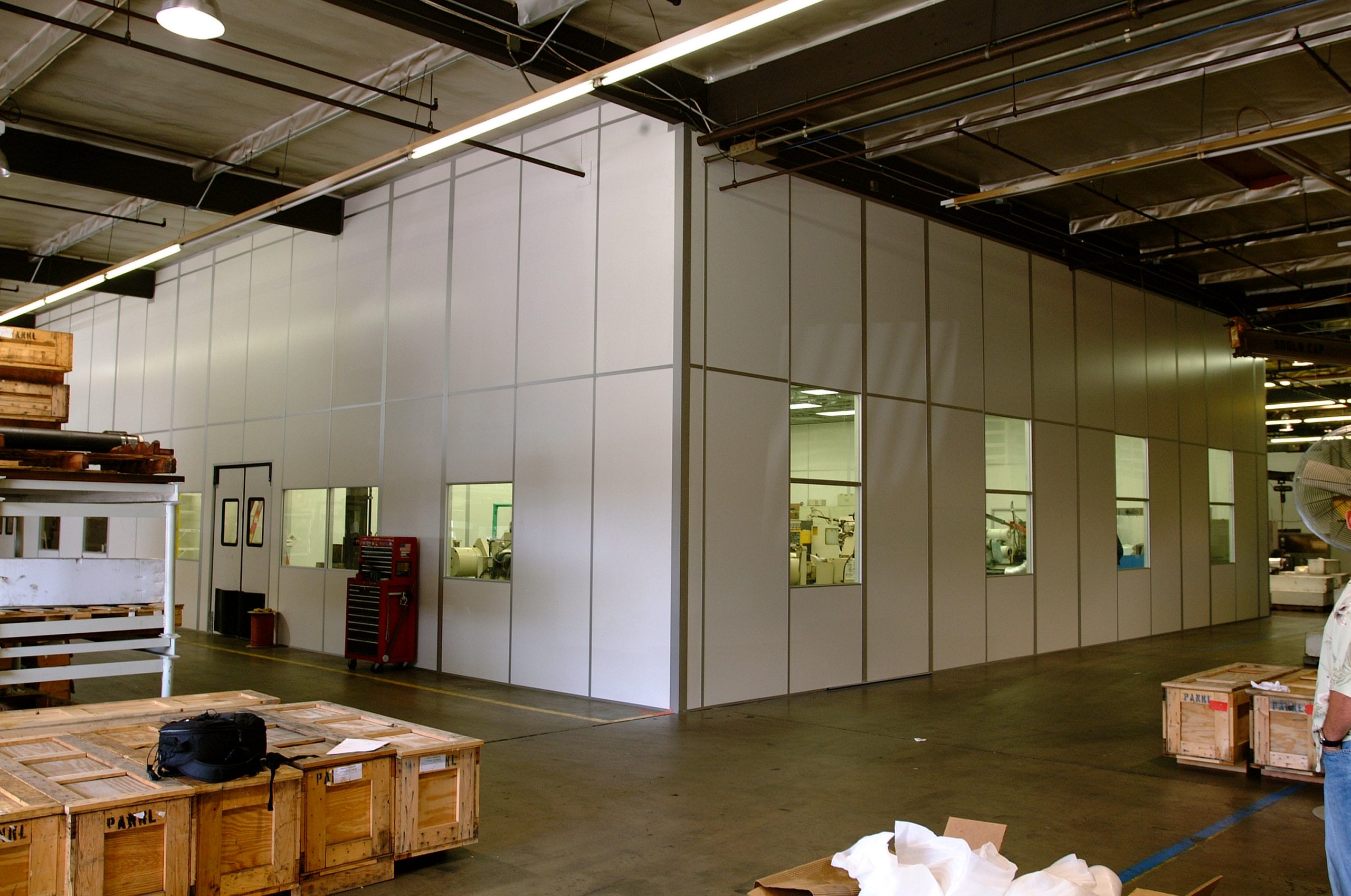
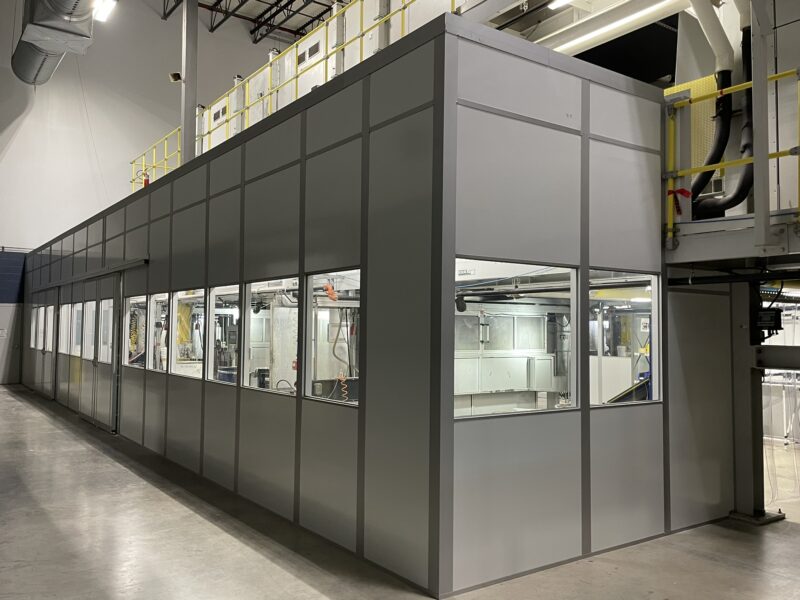
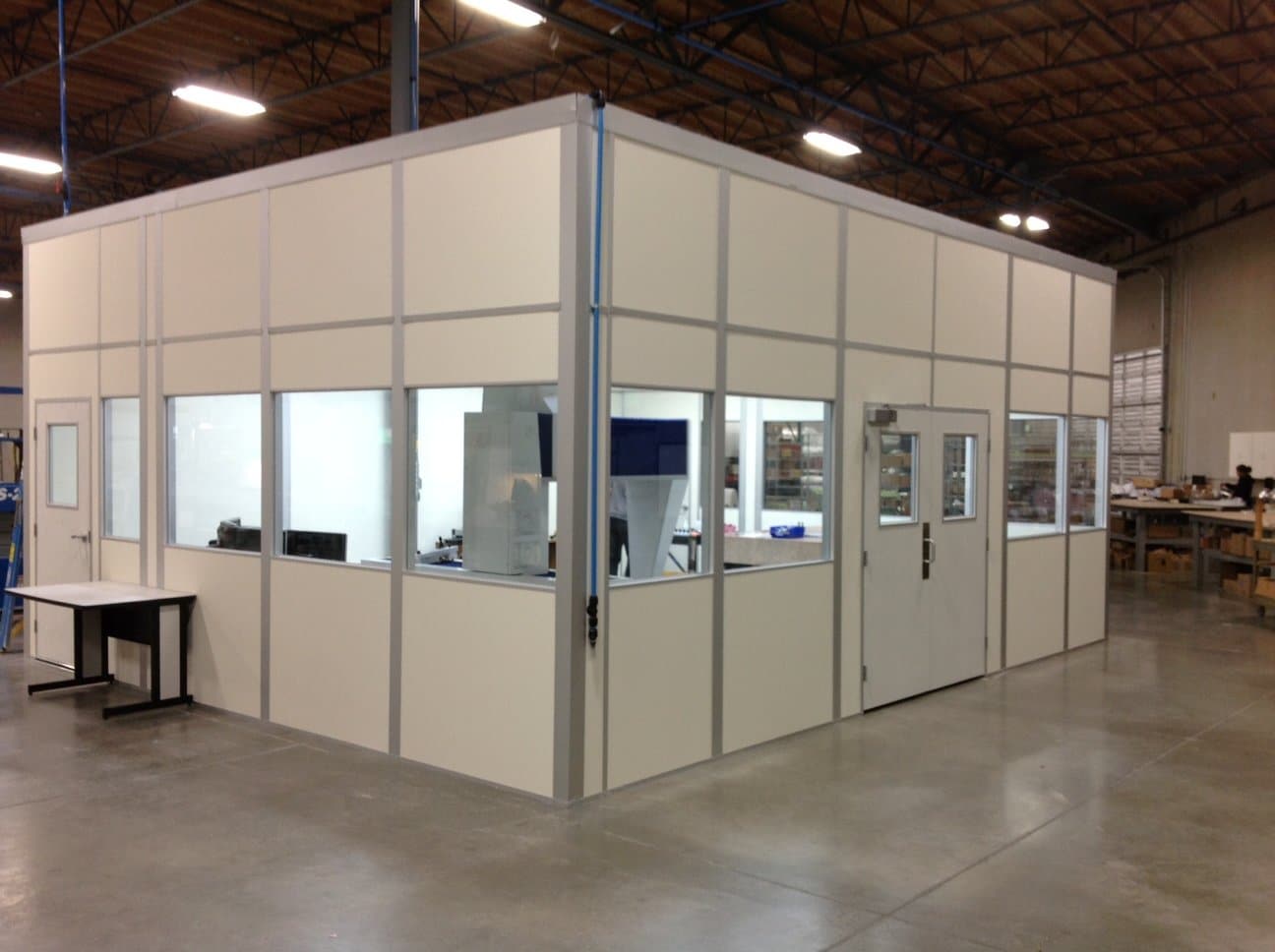
But with modular enclosures you don’t need to worry about all that, since the panels, doors, windows, and other parts are all manufactured offsite. When they show up, installation is more like assembly than construction.
Our teams typically have a standard enclosure assembled and operational within one to five days, depending on the size and complexity of the job.
For most jobs, the machine can keep running right up until the final utility connections are made.
2. “Once It’s Built, You’re Stuck With It”
This one comes from people who are used to stick-built walls. If you need to change something later, you’ll definitely need to demolish them first.
But with modular panels, this no longer applies. They can be reconfigured, expanded, or relocated as needed.
If a machine gets swapped out with another, or the floor layout changes, the enclosure can change with it. You can even add a door, widen an opening, or extend a wall without starting over.
3. “It’s Basically Just Walls Around a Machine”
If all you needed was four walls, you could frame something up with plywood and call it a day. The reason enclosures are engineered is that putting walls and a ceiling around a running machine changes the environment inside.
Heat is one common issue. CNC machines, lasers, and similar equipment generate a lot of thermal energy, and without ventilation or HVAC designed into the enclosure, you’re trapping that heat and potentially causing problems for the machine, the operator, or both.
Then there’s access to think about. Operators need to get in and out, and material has to flow through. What’s more, maintenance needs to happen without taking the enclosure apart.
Depending on the machine, that could mean access doors, roll-up doors, removable panels, hinged wall sections, or some combination of them.
All of this and more gets sorted out during design. But the point is that an enclosure isn’t just a box, but often a full-on controlled environment.
4. “This Is Going to Take Forever”
People tend to think of enclosure projects the way they think of building projects in general. Permits, contractors, delays, months of back and forth.
The typical timeline for a modular machine enclosure is four to eight weeks from the initial conversation to a fully operational enclosure on your floor, which includes the site survey, design, manufacturing, and installation.
The design and manufacturing happen offsite, so there’s nothing happening on your floor until the panels arrive. And once they do, installation is measured in days.
It’s not instant, but it’s a lot faster than most people expect. And because the design is worked out before anything gets built, there’s less of the on-site problem-solving that drags traditional construction projects out.
The Bottom Line
If you’ve been putting off an enclosure project because you assumed it would shut down production, take months, or result in something permanent and inflexible, it might be worth a second look.
Reach out to us at MachineEnclosure.com today and we can walk through what it would actually involve for your situation.