At MachineEnclosure.com, we talk to a lot of people who are thinking about enclosing a machine, but while every application is a little different, we find that a lot of the same questions come up again and again.
As a result, we figured we’d put the answers all in one place.
Here are ten of the most common FAQs about machine enclosures.
1. How Long Does Installation Take?
Installation takes far less time than most people expect.
Because modular panels are built offsite in a factory environment, installation is mostly assembly.
Our teams typically have a standard enclosure assembled and operational within one to five days, depending on the size and complexity of the build. Utility connections, like electrical or HVAC, may take another one to three days.
From the first conversation to a finished enclosure, most projects take about four to eight weeks.
That includes the site survey, design, manufacturing, and installation.
2. Do We Have to Shut Down Production?
In most cases, no. For most jobs, the machine can keep running right up until the final utility connections are made.
The design and manufacturing all happen offsite, so there’s nothing going on near the machine until the panels show up.
3. How Much Does a Machine Enclosure Cost?
The cost of a machine enclosure depends on a variety of factors, including size, materials, environmental controls, and what you’re enclosing.
As a general range, modular construction runs anywhere from $50 to $300 per square foot. A basic enclosure that only needs to contain chips and coolant will be on the lower end, while one that needs to hold a precise temperature, or meet some other environmental conditions, will be on the higher end.
Installation typically adds 30% to 50% of the material cost, and freight usually runs around 10%.
The only way to get an exact number is a quote, but that should give you a rough idea.
4. Do I Need a Permit?
The true answer to this question is “it depends.”
There’s no single hard-and-fast rule for this. It’s entirely up to your local building department, and different jurisdictions treat machine enclosures differently.
Some see them as equipment, and some see them as structures.
A few things make a permit more likely, though. If the enclosure needs new electrical or HVAC connections, that work may need to be permitted or inspected even if the enclosure itself doesn’t.
Also, if the enclosure has a roof, it can block the building’s sprinkler system, which means your fire marshal may want to take a look.
The best move is to check with your local building department early.
5. Can It Be Moved or Expanded Later?
Yes, absolutely, and this is one of the biggest advantages of modular construction.
The panels can be taken apart and put back together easily, so if a machine gets replaced, the floor layout changes, or you need more space, the enclosure can be reconfigured, expanded, or moved to a different spot. You can even add doors or extend a wall without starting over.
6. Will It Help With OSHA Compliance?
It certainly can, and often with more than one standard.
Depending on how it’s designed, a single enclosure can help with machine guarding (1910.212), noise (1910.95), airborne contaminants (1910.134), and slip hazards (from coolant or chips on the floor) (1910.22).
An enclosure also counts as an engineering control.
OSHA’s hierarchy of controls ranks those above administrative controls and PPE, which means OSHA would rather you contain a hazard at the source than hand out earplugs or put up wet floor signs.
7. How Much Quieter Will It Make Things?
This will depend on the machine, the materials, and how well the enclosure is sealed.
Heavy, dense panels will block more sound, and sealed construction keeps noise from leaking out through gaps.
The number that matters most is 85 dBA. That’s the 8-hour average where OSHA requires a hearing conservation program, with noise monitoring, annual hearing tests, training, and recordkeeping.
In many cases, especially with soundproofing materials/methods, an enclosure can bring noise below that threshold.
8. Won’t the Machine Overheat in There?
To be honest, it could if nobody plans for it. CNC machines, lasers, and similar equipment put out a lot of heat, and walls and a ceiling of course trap it.
That’s why temperature requirements should get worked out during design. Depending on the machine, that could mean exhaust fans, filtered air intake, or a dedicated HVAC system.
9. Can Operators Still See and Get to the Machine?
Yes, access is one of the first things we will help you work out.
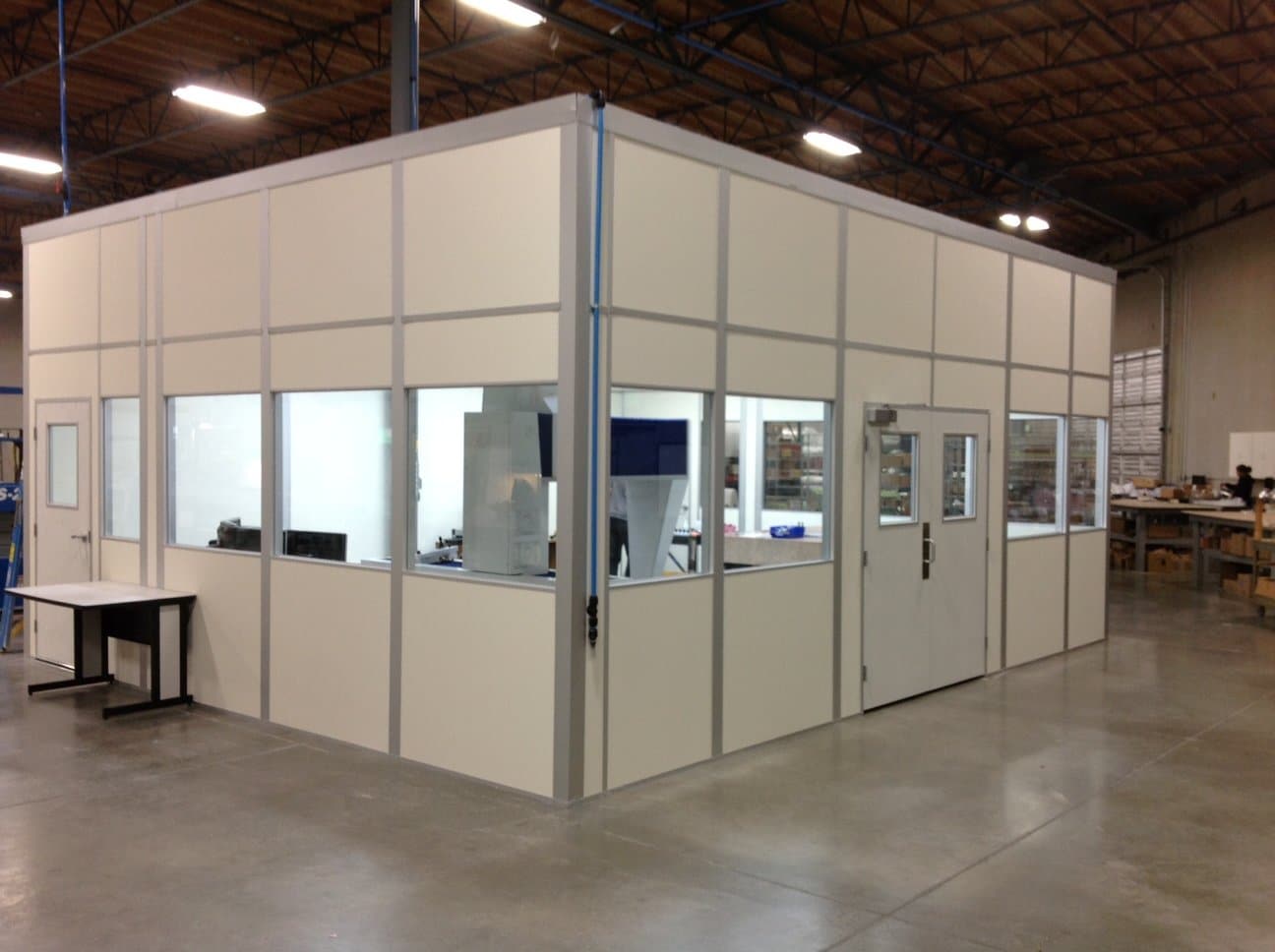
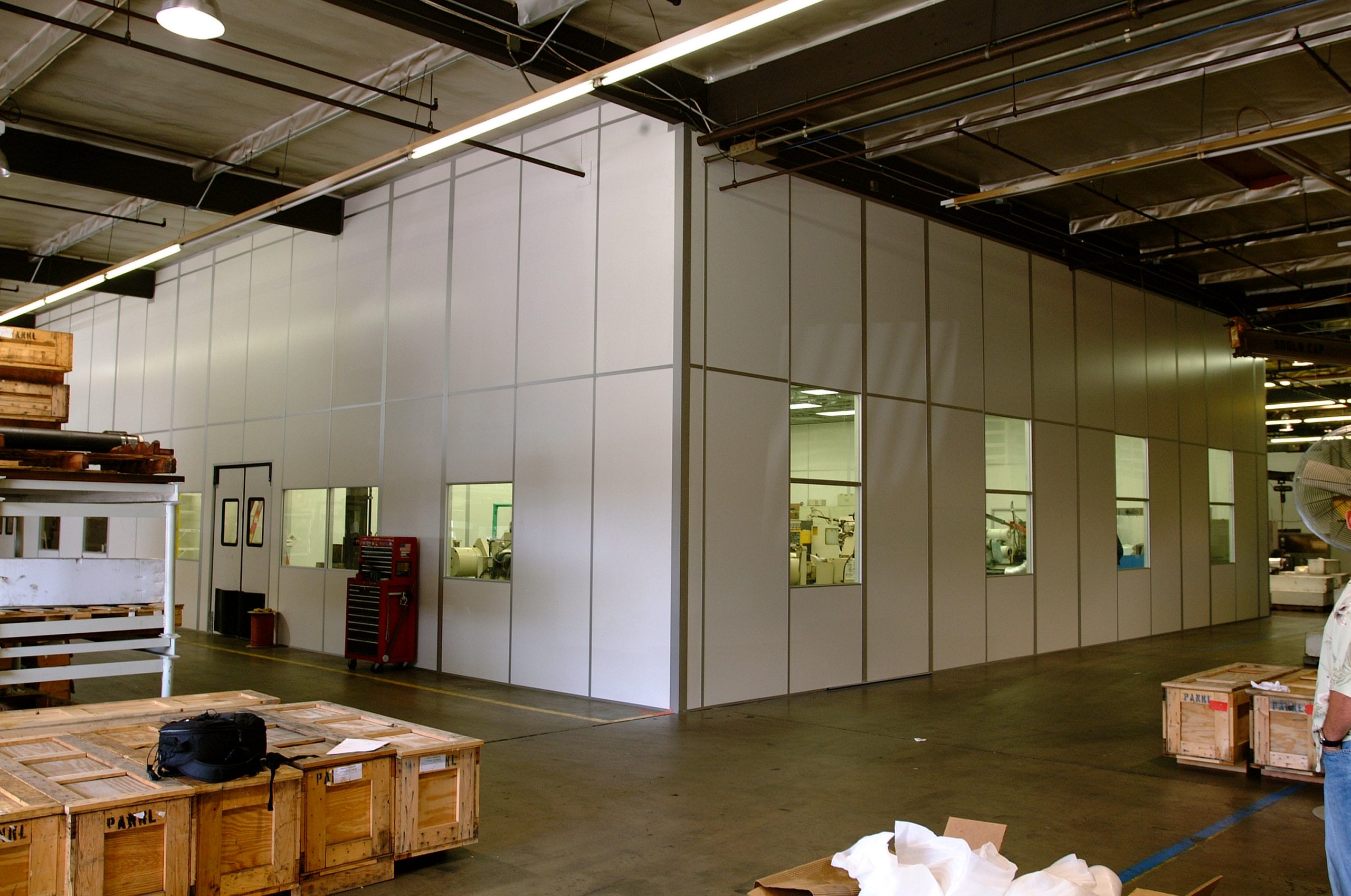
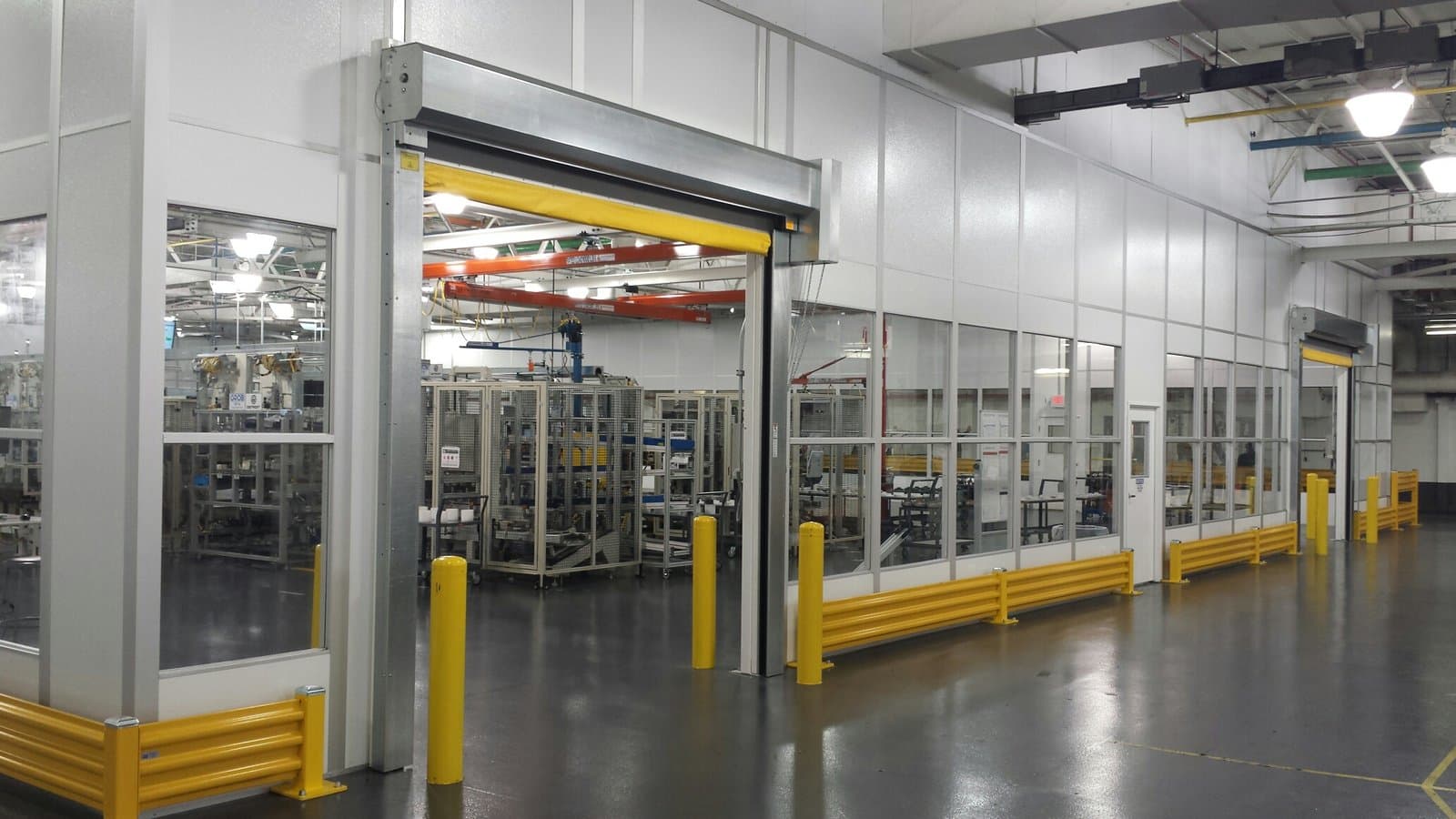
Viewing windows let operators keep an eye on things from outside, and depending on how the machine is used, the enclosure can have access doors, roll-up doors wide enough for a cart or forklift, removable panels, or hinged wall sections for maintenance.
10. What Kinds of Machines Can Be Enclosed?
Pretty much anything that’s loud, messy, hazardous, or sensitive to the surrounding environment.
Some of the most common ones are:
- CNC machines
- CMMs (coordinate measuring machines)
- Lasers
- Robots
- Welding stations
- Milling machines
- Pumps
Some of these need an enclosure to keep something in, like noise, chips, or coolant, while others need one to keep something out.
CMMs, for example, typically need to stay at 20°C (68°F) within about a degree either way to measure accurately.
Have a Question We Didn’t Cover?
If you’re thinking about enclosing a machine and have a question that isn’t on this list, reach out to us at MachineEnclosure.com.
We’re happy to walk through your situation and help you figure out what makes sense for your space.