
Machine Enclosure Design: A Simple Guide
Industrial machinery is an expensive investment, and yet protecting it is often an afterthought. Sometimes companies spend six figures or more on new equipment, and then fail to surround it with anything, not even basic fencing.
This lack of foresight can lead to serious problems: whether in the form of safety issues, equipment damage, or noise complaints. A machine enclosure, and especially one that is designed well, can prevent many of these issues by creating a controlled space around the equipment.
In this guide, we’ll discuss some of the basics of machine enclosure design, what to consider when building one, material selection, and more.
Introduction to Machine Enclosure Design

A machine enclosure is essentially a cover or structure built around a piece of equipment, and it can be done for a variety of reasons. For one, it helps protect people from the moving parts, chips, coolant, and excessive noise. They are also used, however, to protect the machine itself; it can help keep out dust, moisture, and various conditions that may affect the work or longevity of the equipment.
Nowadays, machine enclosures are more than simply metal boxes. They can have specialized panels made of all kinds of materials, and built to fit all kinds of requirements.
What’s more, you’ll find them just about everywhere. They are often used to protect CNC machines, create controlled environments for laser cutters or CMM rooms, and for many other industrial uses. Regardless of the industry, machine enclosure design is the art of designing a space around your equipment that keeps both the machine and your workers safe.
What to Consider When Designing a Machine Enclosure

Designing a machine enclosure isn’t that complicated, but you will need to consider a few things before you start building.
1. Machine Size and Surrounding Space
This might seem obvious, but when designing a machine enclosure, you need to figure out how much space you want between the wall and the machine. Some don’t take into account the comfort of the operator, or how difficult a tight space may be for the maintenance guy. Of course, for machines that you don’t need to access often, you might want a tight fit. But if you need to store raw materials in the same space, or have some other activities that may need extra space, then you will likely need a bigger enclosure.
2. Environmental Conditions
Many if not most machines have ideal operating temperatures, and running them outside that range can cause issues with use. For instance, some machines operating with tight tolerances need to stay within a few degrees, or else they may make mistakes. As a result, enclosures often need to double as controlled environments, and especially ones that regulate temperature, humidity, lighting, air quality, and more.
3. How Workers Will Access the Machine
This was also part of the considerations regarding size, but it’s worth the extra emphasis.
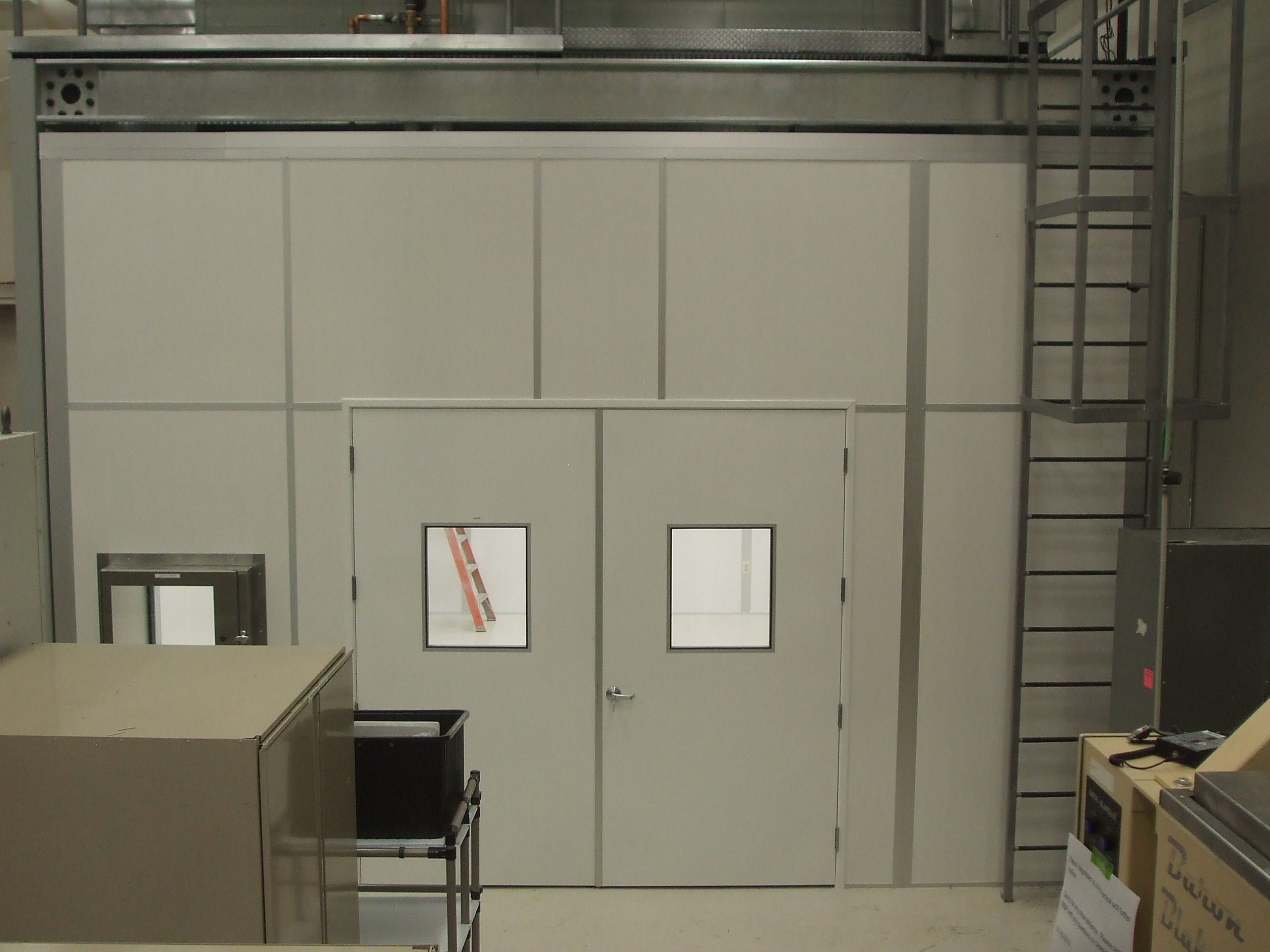
A good question to ask is: How will people move around, into, and out of the space? You should not only consider normal business operations but also times where your machine may need to be repaired or maintenanced.
Will there be enough space for personnel to be comfortable? You may want to add more space than you need, just to be sure.
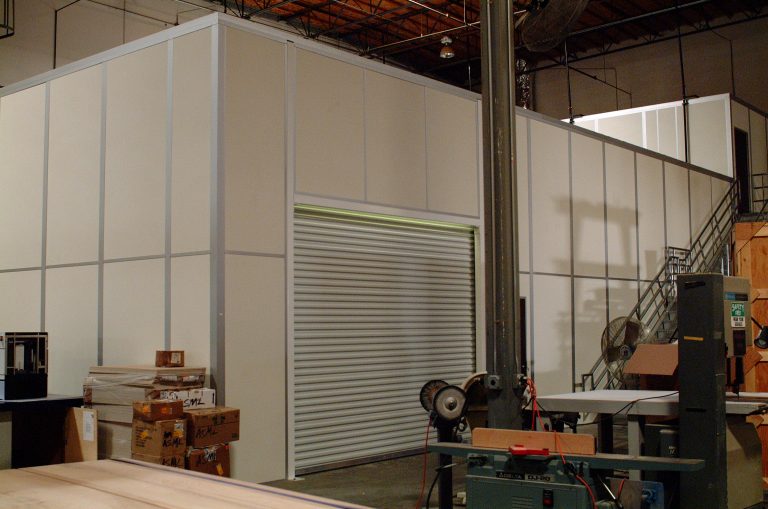
As far as transportation goes, if you need to move materials or crates in or out often, you may want roll-up doors as well.
With modular, there are a lot of customization options that you can choose from.
4. Choosing Between Modular and Traditional Construction
If you want to build a machine enclosure, your main construction options will typically be either traditional or modular.
With traditional construction, you essentially create a permanent structure around the equipment. It can work well if you don’t foresee the need for any future changes, but even then, the process is extremely taxing, and requires the coordination of many contractors, rather than only one.
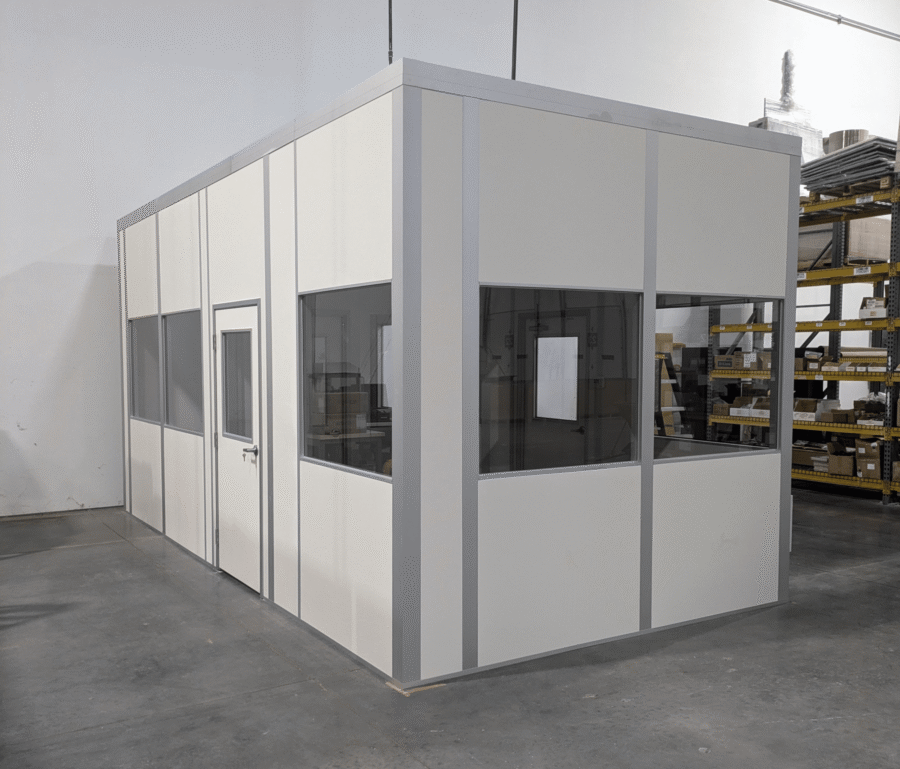
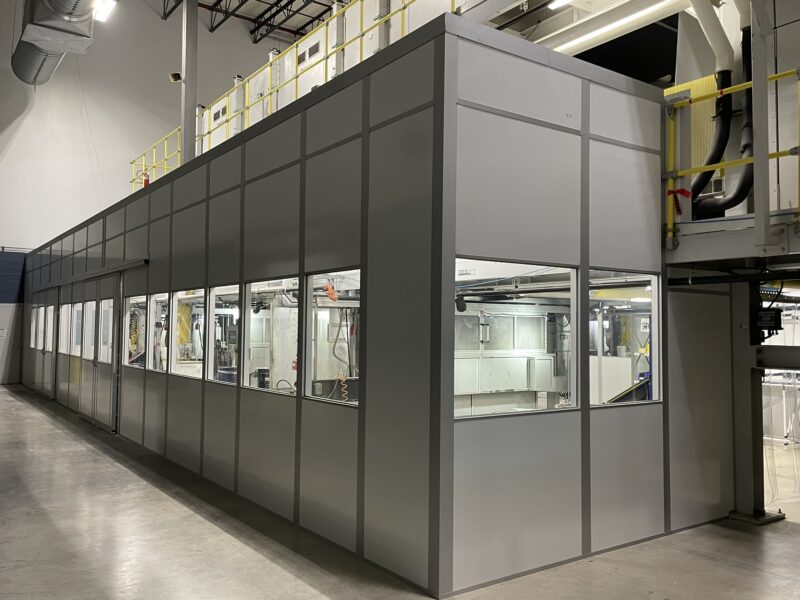
Modular enclosures are much more flexible. They use prefabricated panels that are built within a factory, and then can be assembled on site at your location. This speeds up the process significantly, and what’s more, your building can be adapted, expanded, or moved altogether if need be.
| Modular Enclosures | Traditional Construction | |
|---|---|---|
| Installation Time | Days to weeks | Weeks to months |
| Flexibility | High | Low |
| Ability to Relocate | Yes | No |
| Customization Options | Highly customizable | Limited once built |
| Cost Efficiency Over Time | High | Low if changes are needed |
Material Selection for Machine Enclosures

For machine enclosure design, the materials matter just as much as anything else. Your exact choice of materials will depend, of course, on what your goals are with your enclosure. Some may build with strong materials, some with soundproofing features, and others for protection against fires. Here are some of the most common materials used in machine enclosure design, as well as why they’re chosen:
- Aluminum: Both lightweight and tough. Aluminum is especially common for modular framing systems because of this.
- Steel: Everyone knows steel is tough, but it’s also very resistant to things like rust, moisture, and chemicals (some materials degrade with frequent cleaning). Great for industrial spaces.
- Fiberglass-Reinforced Plastic (FRP): Has a high strength-to-weight ratio. Not as tough as steel, but holds up well against corrosion and chemicals.
- Composite Panels: Made from layered materials like metal and foam or mineral cores. These can have a variety of benefits, depending on the exact materials it is composed of, but can be good for reducing noise, help with insulation, or resisting impacts.
The Bottom Line
Machine enclosure design is all about keeping your equipment protected and your team safe. Considerations about the size and materials used to enclose the machine, as well as how people will access it, can save you from much bigger problems later. Whether you go with modular or traditional construction, the important thing is making sure the enclosure is built to preserve the value of the equipment it’s protecting.
Interested in setting up modular machine enclosures? Reach out to the experts at MachineEnclosure.com today to get a quote and begin the design phase.
FAQs About Machine Enclosure Design
1. Can machine enclosures be moved after they’re installed?
If it’s a modular one, then yes, absolutely. Modular machine enclosures are designed to be easy to take apart, expanded, or moved as you need. Traditional enclosures are more “permanent,” in the sense that they would require demolition if you need to move the machinery.
2. How long does it take to install a modular enclosure?
Most modular enclosures can be installed within a few days. Machine enclosures are usually simple structures, but if they have many rooms or special features, it may take a week or two. At any rate, modular construction is much faster than traditional construction.
3. Are there standard sizes for machine enclosures?
No, not really. Some manufacturers may have standard sizing, but in most cases it is best to have them custom built, as each business’s needs are different.